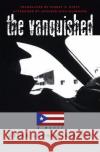
Originally published in Puerto Rico in 1956 as Los derrotados, Cesar Andreu Iglesias's novel about a fateful Nationalist assault on a U.S. military installation in Puerto Rico is now available for the first time in English.
This tautly written story uncovers the personal histories of three middle-aged revolutionaries as they plan to kill a U.S. general. Andreu's cool treatment of their political objectives does not obscure his compassionate recognition of their human limitations. Andreu makes clear his view that the Nationalist answer to Puerto Rico's problems had become an...
Originally published in Puerto Rico in 1956 as Los derrotados, Cesar Andreu Iglesias's novel about a fateful Nationalist assault on a U.S. mili...
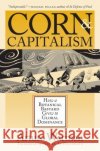
Exploring the history and importance of corn worldwide, Arturo Warman traces its development from a New World food of poor and despised peoples into a commodity that plays a major role in the modern global economy.
The book, first published in Mexico in 1988, combines approaches from anthropology, social history, and political economy to tell the story of corn, a "botanical bastard" of unclear origins that cannot reseed itself and is instead dependent on agriculture for propagation. Beginning in the Americas, Warman depicts corn as colonizer. Disparaged by the conquistadors, this...
Exploring the history and importance of corn worldwide, Arturo Warman traces its development from a New World food of poor and despised peoples into a...
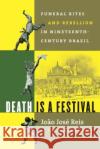
This award-winning social history of death and funeral rites during the early decades of Brazil's independence from Portugal focuses on the Cemiterada movement in Salvador, capital of the province of Bahia. The book opens with a lively account of the popular riot that ensued when, in 1836, the government condemned the traditional burial of bodies inside Catholic church buildings and granted a private company a monopoly over burials.
This episode is used by Reis to examine the customs of death and burial in Bahian society, explore the economic and religious conflicts behind the move...
This award-winning social history of death and funeral rites during the early decades of Brazil's independence from Portugal focuses on the Cemiterada...
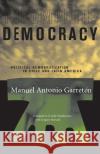
One of Latin America's leading sociologists, Manuel Antonio Garreton explores contemporary challenges to democratization in Latin America in this work originally published in Spanish in 1995. He pays particular attention to the example of Chile, analyzing the country's return to democracy and its hopes for continued prosperity following the 1973 coup that overthrew democratically elected president Salvador Allende. Garreton contends that the period of democratic crisis and authoritarian rule that characterized much of Latin America in the 1960s and 1970s was symptomatic of a larger...
One of Latin America's leading sociologists, Manuel Antonio Garreton explores contemporary challenges to democratization in Latin America in this work...
In a landmark study of history, power, and identity in the Caribbean, Pedro L. San Miguel examines the historiography of Hispaniola, the West Indian island shared by Haiti and the Dominican Republic. He argues that the national identities of (and often the tense relations between) citizens of these two nations are the result of imaginary contrasts between the two nations drawn by historians, intellectuals, and writers.
Covering five centuries and key intellectual figures from each country, San Miguel bridges literature, history, and ethnography to locate the origins of racial,...
In a landmark study of history, power, and identity in the Caribbean, Pedro L. San Miguel examines the historiography of Hispaniola, the West Indian i...
The Argentine scholar NoE Jitrik has long been one of the foremost literary critics in Latin America, noted not only for his groundbreaking scholarship but also for his wit. This volume is the first to make available in English a selection of his most influential writings. These sparkling translations of essays first published between 1969 and the late 1990s reveal the extraordinary scope of Jitrik's work, his sharp insights into the interrelations between history and literature, and his keen awareness of the specificities of Latin American literature and its relationship to European writing....
The Argentine scholar NoE Jitrik has long been one of the foremost literary critics in Latin America, noted not only for his groundbreaking scholarshi...
Many critics consider "The Initials of the Earth" to be the quintessential novel of the Cuban Revolution and the finest work by the Cuban writer and filmmaker JesUs DIaz. Born in Havana in 1941, DIaz was a witness to the Revolution and ardent supporter of it until the last decade of his life. In 1992 he took up residence as an exile in Berlin and later in Madrid, where he died in 2002. This is the first of his books to be translated into English.
Originally written in the 1970s, then rewritten and published simultaneously in Havana and Madrid in 1987, "The Initials of the Earth" spans the...
Many critics consider "The Initials of the Earth" to be the quintessential novel of the Cuban Revolution and the finest work by the Cuban writer and f...