With a riotous mix of saints and devils, street theater and dancing, and music and fireworks, Christian festivals are some of the most lively and colorful spectacles that occur in Spain and its former European and American possessions. That these folk celebrations, with roots reaching back to medieval times, remain vibrant in the high-tech culture of the twenty-first century strongly suggests that they also provide an indispensable vehicle for expressing hopes, fears, and desires that people can articulate in no other way.
In this book, Max Harris explores and develops principles for...
With a riotous mix of saints and devils, street theater and dancing, and music and fireworks, Christian festivals are some of the most lively and c...
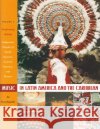
The music of the peoples of South and Central America, Mexico, and the Caribbean has never received a comprehensive treatment in English until this multi-volume work. Taking a sociocultural and human-centered approach, Music in Latin America and the Caribbean gathers the best scholarship from writers all over the world to cover in depth the musical legacies of indigenous peoples, creoles, African descendants, Iberian colonizers, and other immigrant groups that met and mixed in the New World. Within a history marked by cultural encounters and dislocations, music emerges as the...
The music of the peoples of South and Central America, Mexico, and the Caribbean has never received a comprehensive treatment in English until this...
As educators and legislators across the country debate how to improve public schools, the most vital factor often disappears from the equation--the relationship between the teacher and the student. According to veteran educators Rita and Marco Portales, this relationship is the central issue in the education of students, especially Latino/a students who often face serious barriers to school success because of the legacy of racism, insufficient English-language skills, and cultural differences with the educational establishment.
To break down these barriers and help Latino/a students...
As educators and legislators across the country debate how to improve public schools, the most vital factor often disappears from the equation--the...
The music of the peoples of South and Central America, Mexico, and the Caribbean is treated with unprecedented breadth in this multi-volume work. Taking a sociocultural and human-centered approach, Music in Latin America and the Caribbean gathers the best scholarship from writers all over the world to cover in depth the musical legacies of indigenous peoples, creoles, African descendants, Iberian colonizers, and other immigrant groups that met and mixed in the New World. From these texts, music emerges as the powerful tool that negotiates identities, enacts resistance,...
The music of the peoples of South and Central America, Mexico, and the Caribbean is treated with unprecedented breadth in this multi-volume work. T...
A masterful examination of the "monumental ambivalence" that results when private and public interests compete to control and benefit from archaeological and historical sites.
A masterful examination of the "monumental ambivalence" that results when private and public interests compete to control and benefit from archaeologi...
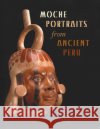
Of all the ancient civilizations that flourished in the Americas, only one perfected true portraiture of living people and produced it in quantity--the Moche who inhabited the north coast of Peru between approximately AD 100 and 800. Using the medium of three-dimensional ceramic vessels that could have contained liquid, Moche artisans typically formed the heads of the individuals they wished to portray, though sometimes they presented full figures with realistic portrait faces. Depicting an astonishing range of physical types, these portraits now allow us to meet Moche people who lived...
Of all the ancient civilizations that flourished in the Americas, only one perfected true portraiture of living people and produced it in quantity-...
Conceptualism played a different role in Latin American art during the 1960s and 1970s than in Europe and the United States, where conceptualist artists predominantly sought to challenge the primacy of the art object and art institutions, as well as the commercialization of art. Latin American artists turned to conceptualism as a vehicle for radically questioning the very nature of art itself, as well as art's role in responding to societal needs and crises in conjunction with politics, poetry, and pedagogy. Because of this distinctive agenda, Latin American conceptualism must be viewed...
Conceptualism played a different role in Latin American art during the 1960s and 1970s than in Europe and the United States, where conceptualist ar...
Native to a high valley in the Andes of Ecuador, the Otavalos are an indigenous people whose handcrafted textiles and traditional music are now sold in countries around the globe. Known as weavers and merchants since pre-Inca times, Otavalos today live and work in over thirty countries on six continents, while hosting more than 145,000 tourists annually at their Saturday market.
In this ethnography of the globalization process, Lynn A. Meisch looks at how participation in the global economy has affected Otavalo identity and culture since the 1970s. Drawing on nearly thirty years of...
Native to a high valley in the Andes of Ecuador, the Otavalos are an indigenous people whose handcrafted textiles and traditional music are now sol...