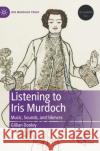
When we think of Iris Murdoch’s relationship with art forms, the visual arts come most readily to mind. However, music and other sounds are equally important. Soundscapes – music and other types of sound – contribute to the richly textured atmosphere and moral tenor of Murdoch’s novels. This book will help readers to appreciate anew the sensuous nature of Iris Murdoch’s prose, and to listen for all kinds of music, sounds and silences in her novels, opening up a new sub-field in Murdoch studies in line with the emerging field of Word and Music Studies.
This study is...
When we think of Iris Murdoch’s relationship with art forms, the visual arts come most readily to mind. However, music and other sounds are equal...
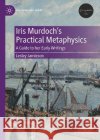
This book explores Iris Murdoch as a philosopher who, through her distinctive methodology, exploits the advantages of having a mind on the borders of literature and politics in her early career writings (pre-The Sovereignty of Good). By focusing on a single decade of Murdoch’s early career, Jamieson tracks connections between her views on the state of literature and politics in postwar Britain and her approach to the philosophy of mind and moral philosophy. Furthermore, this close study reveals that, far from a stylistic quirk, Murdoch’s use of metaphors, analogies, and other...
This book explores Iris Murdoch as a philosopher who, through her distinctive methodology, exploits the advantages of having a mind on the borders ...
This volume is the third volume in Palgrave' Macmillan's new Iris Murdoch Today scholarly series.
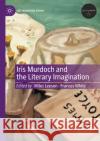
Iris Murdoch and the Literary Imagination is the first major collection of literary essays since her centenary in 2019. It brings together leading Murdoch scholars from across the world who expand the boundaries of recent criticism offering work not only on the novels, but on her unpublished poetry and archival materials. This collection discusses her interest in, and use of, Japanese literature; her relationship with, and reader-response to her, in Australia;...
This volume is the third volume in Palgrave' Macmillan's new Iris Murdoch Today scholarly series.
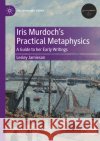
This book explores Iris Murdoch as a philosopher who, through her distinctive methodology, exploits the advantages of having a mind on the borders of literature and politics in her early career writings (pre-The Sovereignty of Good). By focusing on a single decade of Murdoch’s early career, Jamieson tracks connections between her views on the state of literature and politics in postwar Britain and her approach to the philosophy of mind and moral philosophy. Furthermore, this close study reveals that, far from a stylistic quirk, Murdoch’s use of metaphors, analogies, and other...
This book explores Iris Murdoch as a philosopher who, through her distinctive methodology, exploits the advantages of having a mind on the borders ...
This exploration of the crucially important role played by remorse in Iris Murdoch’s philosophical, theological, and political thinking identifies it as a critical concept in her moral psychology and a recurrent theme in her art. Through engagement with Simone Weil, current theories of remorse, trauma theory and Holocaust studies, it offers fresh perspectives on Murdoch’s fiction – particularly the late novels, her radio play The One Alone, and her monograph Heidegger.
This exploration of the crucially important role played by remorse in Iris Murdoch’s philosophical, theological, and political thinking identifie...
This book presents the first ecocritical study of novelist, philosopher, poet and public intellectual Iris Murdoch (1919–1999). It brings her love of the natural world into the light, arguing for its critical significance when Murdoch conveys an awareness of intricately interconnected ecologies through her work: an awareness that anticipates the motivations and concerns of modern-day environmental humanities. The book is the first of its kind to assess some of Murdoch's poems, seen as early articulation of the...
This book presents the first ecocritical study of novelist, philosopher, poe...
This is the first survey of Murdoch’s exploration of evil, addressing aesthetic, philosophical, political and theological perspectives. The study demonstrates how her work engages with currently urgent issues of trauma, terrorism and psychopathy and brings her works into dialogue with key figures in twentieth- and twenty-first-century discussions of evil, including Hannah Arendt, Carl Gustav Jung, Susan Neiman and Simone Weil. These resonances are traced through close readings of Murdoch’s published fiction and philosophy in combination with unpublished texts, including annotations,...
This is the first survey of Murdoch’s exploration of evil, addressing aesthetic, philosophical, political and theological perspectives. The study...