John Maynard Keynes (1883-1946) was the most influential economist of the first half of the twentieth century. During both world wars he was an adviser to the British treasury, and his theory of government stimulation of the economy through deficit spending influenced Franklin D. Roosevelt's "New Deal" administration. The mass unemployment caused by the Great Depression inspired his most famous work, General Theory of Employment, Interest and Money (1935-36). Keynes first gained widespread prominence immediately following World War I, when he attended the Versailles peace...
John Maynard Keynes (1883-1946) was the most influential economist of the first half of the twentieth century. During both world wars he was an advise...
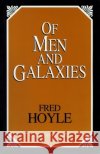
In this compilation of popular lectures delivered in 1964, Hoyle comments on the nature of the scientific enterprise, gives his view of life on Earth from the perspective of astronomy, and speculates about the future.
In this compilation of popular lectures delivered in 1964, Hoyle comments on the nature of the scientific enterprise, gives his view of life on Earth ...
A Preface to Politics (1913) was the first book of political commentary published by Walter Lippmann, one of the most widely read and influential journalists of the 20th century. Shortly after its publication, Lippmann cofounded The New Republic magazine, in which he regularly published the kind of astute political analysis that he debuted in A Preface to Politics. He later served in the administration of Woodrow Wilson and had a decisive influence on the formulation of Wilson's famous Fourteen Points. But his greatest influence came from the popular syndicated column called "Today and...
A Preface to Politics (1913) was the first book of political commentary published by Walter Lippmann, one of the most widely read and influential jour...
Despite the increasing use of DNA evidence and other sophisticated forensic techniques in crime solving, fingerprints still serve as an indispensable tool of modern-day criminal investigation. This fascinating book, originally published in 1892, represents the first thorough investigation of this anatomical peculiarity and its application in establishing individual identity for use in law enforcement. Sir Francis Galton, a cousin of Charles Darwin and a member of the Royal Geographical Society, had already made a reputation for himself as an explorer of Africa and the founder of the new...
Despite the increasing use of DNA evidence and other sophisticated forensic techniques in crime solving, fingerprints still serve as an indispensable ...
Talks about Einstein's theory of relativity and its paradigm-shifting implications for philosophy and common-sense notions of reality. Explaining both the special and general theories of relativity, this book introduces readers to Einstein's theories and the importance of the physicist's contributions.
Talks about Einstein's theory of relativity and its paradigm-shifting implications for philosophy and common-sense notions of reality. Explaining both...
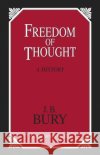
One of the best surveys of the drama of intellectual history. With striking eloquence and clarity of expression, Bury succinctly describes the struggle of reason in the search for truth from ancient times to the beginning of the 20th century.
One of the best surveys of the drama of intellectual history. With striking eloquence and clarity of expression, Bury succinctly describes the struggl...