This volume contains a critical edition and an introduction to the Arabic translation and commentary on the book of Proverbs by one of the most acclaimed, innovative, and prolific exegetes of the Karaite "Golden Age" (10th-11th centuries), Yefet ben 'Eli ha-Levi. Yefet's commentary on Proverbs attests to his rationalistic and revisionist ideology and to his egalitarian approach. His work is an invaluable link in the history of interpretation of the book of Proverbs. This edition is accompanied by an introduction including a thorough study of Yefet's style of writing compared with the Arabic...
This volume contains a critical edition and an introduction to the Arabic translation and commentary on the book of Proverbs by one of the most acclai...
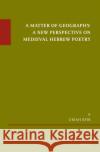
This collection of essays offers an inquiry into the complex interaction between exegesis and poetry that characterized medieval and early modern Karaite and Rabbanite treatment of the Bible in the Islamic world, the Byzantine Empire, and Christian Europe. Discussing a variety of topics that are usually associated with either exegesis or poetry in conjunction with the two fields, the authors analyze a wide array of interactions between biblical sources and their interpretive layers, whether in prose exegesis or in multiple forms of poetry and rhymed prose. Of particular relevance are...
This collection of essays offers an inquiry into the complex interaction between exegesis and poetry that characterized medieval and early modern Kara...
The present volume offers a critical edition of the Hebrew texts, accompanied by English translation and commentary of Reshit Ḥokhmah (Beginning of Wisdom) and Mishpeṭei ha-Mazzalot (Judgments of the Zodiacal Signs) by Abraham Ibn Ezra (ca. 1089-ca. 1161). The first, the summa and by far the longest of his astrological works, the target of the most cross-references from the rest of that corpus and the most influential, enjoyed the widest circulation among Jews in the Middle Ages and after. The second, by contrast, is the most obscure. It is never referred to...
The present volume offers a critical edition of the Hebrew texts, accompanied by English translation and commentary of Reshit Ḥokhmah (Be...
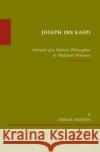
Joseph Ibn Kaspi was among the most prolific philosophical writers in one of the most vibrant, productive, creative periods in the history of Jewish philosophy. Born around 1280 in Provence, Ibn Kaspi penned works engaging a broad range of fields, including philosophy, theology, grammar, logic, biblical exegesis, and interreligious polemics. In Joseph Ibn Kaspi: Portrait of a Hebrew Philosopher in Medieval Provence, Adrian Sackson asks the question: What was Ibn Kaspi's overarching intellectual project? The book focuses on several key themes: Ibn Kaspi's conception of the formative...
Joseph Ibn Kaspi was among the most prolific philosophical writers in one of the most vibrant, productive, creative periods in the history of Jewish p...
In ᵓUṣṣit il-Gumguma Olav G. Orum translates and analyzes three parallel 19th-century Judaeo-Arabic manuscripts from Egypt. These manuscripts present a story (whose earliest version is attributed to Kaᶜb al-ᵓAḥbār) about Jesus reviving the skull of a deceased king. The skull narrates his encounter with the Angel of Death, a painful purgatory and descension to hell. The manuscripts reveal a wide spectrum of interesting written and spoken Egyptian Judaeo-Arabic variety features and Orum pays special attention to signs of linguistic divergence from...
In ᵓUṣṣit il-Gumguma Olav G. Orum translates and analyzes three parallel 19th-century Judaeo-Arabic manuscripts from Egypt. T...