The church of San Marco of Venice has long played a central role in Venetian political, ceremonial, and religious life. Its renowned assemblage of mosaics, sculpture, metalwork, and reliquaries are, in origin, Roman, Byzantine, Venetian, or Venetian imitation of Byzantine designs. In San Marco, Byzantium, and the myths of Venice, the authors assess the significance of the embellishment of the church and its immediate surroundings, especially during the thirteenth and fourteenth centuries, when most of the Byzantine material was acquired, largely from Constantinople.
The church of San Marco of Venice has long played a central role in Venetian political, ceremonial, and religious life. Its renowned assemblage of mos...
How are markets in antiquity to be characterized? As comparable to modern free markets, with differences in scale not quality? As controlled and dominated by the State? Or as a third way, in completely different terms, as free but regulated? In "Trade and Markets in Byzantium" seventeen scholars address these and related issues by reexamining and reinterpreting the material and textual record from Byzantium and its hinterland for local, regional, and interregional trade. Special emphasis is placed on local trade, which has been understudied. To comprehend the recovery of long-distance trade...
How are markets in antiquity to be characterized? As comparable to modern free markets, with differences in scale not quality? As controlled and domin...
Despite increased interest over the last fifty years in childhood in Byzantium, the bibliography on this topic remains rather short and generalized. Becoming Byzantine: Children and Childhood in Byzantium presents detailed information about children's lives and provides a basis for further study. This collection of eight articles drawn from a May 2006 Dumbarton Oaks symposium covers matters relevant to daily life such as the definition of children in Byzantine law, procreation, death, breastfeeding patterns, and material culture. Religious and political perspectives are also used to...
Despite increased interest over the last fifty years in childhood in Byzantium, the bibliography on this topic remains rather short and generalized. <...
This volume contains selected papers from a December 2006 Dumbarton Oaks symposium that complemented an exhibition of early Bible manuscripts at the Freer Gallery and Sackler Gallery of Art titled "In the Beginning: Bibles before the Year 1000." Speakers were invited to examine the use of the Greek Old Testament as a text, social practice, and cultural experience in the Byzantine Empire. Not only are reminiscences of the Old Testament ubiquitous in Byzantine literature and art, but the Byzantine people also revered and identified with Old Testament role models. The Old Testament connected...
This volume contains selected papers from a December 2006 Dumbarton Oaks symposium that complemented an exhibition of early Bible manuscripts at the F...
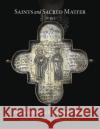
Enshrined in sumptuous metal, ivory, or stone containers, relics formed an important physical and spiritual bond between heaven and earth, linking humankind to their saintly advocates in heaven. As they were carried in liturgical processions, used in imperial ceremonies, and called upon in legal disputes and crises, relics--and, by extension, their precious containers and built shrines--provided a visible link between the living and the venerated dead. Saints and Sacred Matter explores the embodied aspects of the divine--physical remains of holy men and women and objects associated...
Enshrined in sumptuous metal, ivory, or stone containers, relics formed an important physical and spiritual bond between heaven and earth, linking hum...
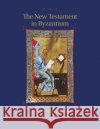
The New Testament lay at the center of Byzantine Christian thought and practice. But codices and rolls were neither the sole way--nor most important way--the Byzantines understood the New Testament. Lectionaries apportioned much of its contents over the course of the liturgical calendar; its narratives structured the experience of liturgical time and shaped the nature of Christian preaching, throughout Byzantine history. A successor to The Old Testament in Byzantium (2010), this book asks: What was the New Testament for Byzantine Christians? What of it was known, how, when, where,...
The New Testament lay at the center of Byzantine Christian thought and practice. But codices and rolls were neither the sole way--nor most importan...