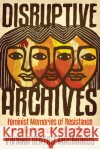
Often perceived as unbridgeable, the boundaries that divide humanity from itself--whether national, gender, racial, political, or imperial--are rearticulated through friendship. Elora Halim Chowdhury and Liz Philipose edit a collection of essays that express the different ways women forge hospitality in deference to or defiance of the structures meant to keep them apart. Emerging out of postcolonial theory, the works discuss instances when the authors have negotiated friendship's complicated, conflicted, and contradictory terrain; offer fresh perspectives on feminists' invested, reluctant,...
Often perceived as unbridgeable, the boundaries that divide humanity from itself--whether national, gender, racial, political, or imperial--are rearti...
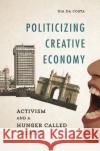
Scholars increasingly view the arts, creativity, and the creative economy as engines for regenerating global citizenship, renewing decayed local economies, and nurturing a new type of all-inclusive politics. Dia Da Costa delves into the global development, nationalist and leftist/progressive histories shaping these ideas with a critical ethnography of two activist performance groups in India: the Communist-affiliated Jana Natya Manch, and Budhan Theatre, a community-based group of the indigenous Chhara people. As Da Costa shows, commodification, heritage, and management discussions...
Scholars increasingly view the arts, creativity, and the creative economy as engines for regenerating global citizenship, renewing decayed local econo...
Often perceived as unbridgeable, the boundaries that divide humanity from itself--whether national, gender, racial, political, or imperial--are rearticulated through friendship. Elora Halim Chowdhury and Liz Philipose edit a collection of essays that express the different ways women forge hospitality in deference to or defiance of the structures meant to keep them apart. Emerging out of postcolonial theory, the works discuss instances when the authors have negotiated friendship's complicated, conflicted, and contradictory terrain; offer fresh perspectives on feminists' invested, reluctant,...
Often perceived as unbridgeable, the boundaries that divide humanity from itself--whether national, gender, racial, political, or imperial--are rearti...
Scholars increasingly view the arts, creativity, and the creative economy as engines for regenerating global citizenship, renewing decayed local economies, and nurturing a new type of all-inclusive politics. Dia Da Costa delves into these ideas with a critical ethnography of two activist performance groups in India: the Communist-affiliated Jana Natya Manch, and Bhutan Theatre, a community-based group of the indigenous Chhara people. As Da Costa shows, commodification, heritage, and management discussions inevitably creep into performance. Yet the ability of performance to undermine such...
Scholars increasingly view the arts, creativity, and the creative economy as engines for regenerating global citizenship, renewing decayed local econo...