Dialogus encompasses Greek language and literature, Greek history and archaeology, Greek culture and thought, present and past: a territory of distinctive richness and unsurpassed influence. It seeks to foster critical awareness and informed debate about the ideas, events and achievements that make up this territory, by redefining their qualities, by exploring their interconnections and by reinterpreting their significance within Western culture and beyond.
Dialogus encompasses Greek language and literature, Greek history and archaeology, Greek culture and thought, present and past: a territory of distinc...
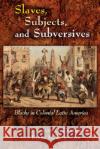
Almost eleven of the twelve million Africans who survived the trauma of enslavement in Africa and the horrors of the Middle Passage, remade their lives in territories claimed by Spain or Portugal. Drawing on a wealth of previously unused sources, the authors show that although plantation slavery was a horrible reality for many Africans and their descendants in Latin America, blacks experienced many other realities in Iberian colonies.
Paul Lovejoy analyzes a treatise by a seventeenth-century Muslim scholar in Morocco and argues it shaped the slave trade to Latin America. John...
Almost eleven of the twelve million Africans who survived the trauma of enslavement in Africa and the horrors of the Middle Passage, remade their l...
Malintzin was the indigenous woman who translated for Hernando Cortes in his dealings with the Aztec emperor Moctezuma in the days of 1519 to 1521. "Malintzin," at least, was what the Indians called her. The Spanish called her dona Marina, and she has become known to posterity as La Malinche. As Malinche, she has long been regarded as a traitor to her people, a dangerously sexy, scheming woman who gave Cortes whatever he wanted out of her own self-interest.
The life of the real woman, however, was much more complicated. She was sold into slavery as a child, and eventually given away to...
Malintzin was the indigenous woman who translated for Hernando Cortes in his dealings with the Aztec emperor Moctezuma in the days of 1519 to 1521....
Bahia is a province of Brazil on its northeastern coast and is the size of the country of France. From the sixteenth century through the 1850s, at least 1.2 million African slaves entered Brazil through Bahia, many of those through the major port city of Salvador.
Dale Graden's study is divided into four parts. He first examines the cause of the demise of the slave trade to Bahia by 1851. International political pressures combined with internal slave resistance forced an abrupt decline in slave importations into the province. Second, he traces Bahia's abolitionist movement through the...
Bahia is a province of Brazil on its northeastern coast and is the size of the country of France. From the sixteenth century through the 1850s, at ...
In this engaging study, Paul Gillingham uses the revelation of the forgery of Cuauhtmocs tomb and the responses it evoked as a means of examining the set of ideas, beliefs, and dreams that bind societies to the nation-state.
In this engaging study, Paul Gillingham uses the revelation of the forgery of Cuauhtmocs tomb and the responses it evoked as a means of examining the ...
The only comprehensive history of Andean South America from initial settlement to the present, this useful book focuses on Colombia, Ecuador, Peru, and Bolivia, the four countries where the Andes have played a major role in shaping history.
Although Henderson emphasizes the period since the winning of independence in 1825, he argues that the region's republican history cannot be explained without a clear understanding of what happened in the pre-Hispanic and colonial eras Henderson carefully explores the complex relationship between the Andean peoples and their land up until the fall of...
The only comprehensive history of Andean South America from initial settlement to the present, this useful book focuses on Colombia, Ecuador, Peru,...
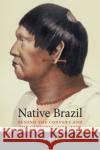
The earliest European accounts of Brazil's indigenous inhabitants focused on the natives' startling appearance and conduct--especially their nakedness and cannibalistic rituals--and on the process of converting them to clothed, docile Christian vassals. This volume contributes to the unfinished task of moving beyond such polarities and dispelling the stereotypes they fostered, which have impeded scholars' ability to make sense of Brazil's rich indigenous past.
This volume is a significant contribution to understanding the ways Brazil's native peoples shaped their own histories....
The earliest European accounts of Brazil's indigenous inhabitants focused on the natives' startling appearance and conduct--especially their nakedness...
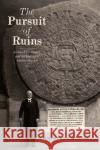
Famous for its majestic ruins, Mexico has gone to great lengths to preserve and display the remains of its pre-Hispanic past. The Pursuit of Ruins argues that the government effort to take control of the ancient remains took off in the late nineteenth century during the dictatorship of Porfirio Diaz. Under Diaz Mexico acquired an official history more firmly rooted in Indian antiquity. This prestigious pedigree served to counter Mexico s image as a backward, peripheral nation. The government claimed symbolic links with the great civilizations of pre-Hispanic times as it hauled...
Famous for its majestic ruins, Mexico has gone to great lengths to preserve and display the remains of its pre-Hispanic past. The Pursuit of Ru...
Tells the remarkable story of a group of nuns who travelled halfway around the globe in the seventeenth century to establish the first female Franciscan convent in the Far East. Drawing from a manuscript from one of the nuns, other archival sources, and rare books, this study offers a fascinating view of travel, evangelization, and empire.
Tells the remarkable story of a group of nuns who travelled halfway around the globe in the seventeenth century to establish the first female Francisc...