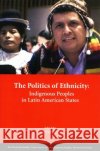
The indigenous people of the hemisphere have resisted a 500-year assault, fighting to maintain their cultural identities. During this time, authorities in the Americas have insisted that the toleration of indigenous societies and cultures would undermine their respective states. In recent years, however, the nations of the Americas have started to reverse themselves. They are altering their constitutions and proclaiming themselves multiethnic. Why is this happening now? The Politics of Ethnicity: Indigenous Peoples in Latin American States, edited by David Maybury-Lewis, helps us understand...
The indigenous people of the hemisphere have resisted a 500-year assault, fighting to maintain their cultural identities. During this time, authoritie...
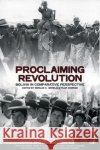
In 1952 Bolivia was transformed by revolution. With the army destroyed from only a few days of fighting, workers and peasants took up arms to claim the country as their own. Overnight, the electorate expanded five-fold. Industries were turned over to worker organisations to manage, and land was distributed to peasant communities. Education became universal and free for the first time in the country's history. Center for Latin American Studies of Harvard University and the Institute for Latin American Studies at the University of London, presents new interpretations of the causes of the events...
In 1952 Bolivia was transformed by revolution. With the army destroyed from only a few days of fighting, workers and peasants took up arms to claim th...
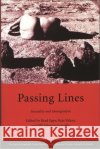
"Passing Lines" seeks to stimulate dialogue on the role of sexuality and sexual orientation in immigration to the U.S. from Latin America and the Caribbean. The book looks at the complexities, inconsistencies, and paradoxes of immigration from the point of view of both academics and practitioners in the field.
"Passing Lines" takes a close look at the debates that surround eyewitness testimony, expertise, and advocacy regarding immigration and sexuality, bringing together work by scholars, activists, and others from both sides of the border.
"Passing Lines" seeks to stimulate dialogue on the role of sexuality and sexual orientation in immigration to the U.S. from Latin America and the Car...
"Bitter Fruit" is a comprehensive and insightful account of the CIA operation to overthrow the democratically elected government of Jacobo Arbenz of Guatemala in 1954. First published in 1982, this book has become a classic, a textbook case of the relationship between the United States and the Third World. The authors make extensive use of U.S. government documents and interviews with former CIA and other officials. It is a warning of what happens when the United States abuses its power.
"Bitter Fruit" is a comprehensive and insightful account of the CIA operation to overthrow the democratically elected government of Jacobo Arbenz of G...
First written in 1570, this work now published for the first time in modern Spanish with an English translation sheds light on the Inqa (Inca) world. The writing of Instruccion followed more than a decade of negotiations and skirmishes between Inqa rebels and Spanish officials who were receiving their orders from Spain to find a diplomatic, or alternatively violent, solution to integrate these independently governed territories under Spanish colonial rule.
First written in 1570, this work now published for the first time in modern Spanish with an English translation sheds light on the Inqa (Inca) world. ...