The Fabric of Cities presents an interdisciplinary collection of articles on urbanism in ancient Mesopotamia, Israel, Greece and Rome, which focuses on the social dimension of cities' topographical features. The contributions of this book offer investigations of neighbourhoods, city gates, streets, temples and palaces drawing on textual and archaeological sources as well as art. The topics treated in this work encompass the diverse functions of public and marginal spaces in Mesopotamian cities and Rome, the role of agency in the development of Babylonian neighbourhoods, the...
The Fabric of Cities presents an interdisciplinary collection of articles on urbanism in ancient Mesopotamia, Israel, Greece and Rome, which fo...
Historical and Archaeological Aspects of Egyptian Funerary Culture, a thoroughly reworked translation of Les textes des sarcophages et la democratie published in 2008, challenges the widespread idea that the "royal" Pyramid Texts of the Old Kingdom after a process of "democratisation" became, in the Middle Kingdom, accessible even to the average Egyptian in the form of the Coffin Texts. Rather they remained an element of elite funerary culture, and particularly so in the Upper Egyptian nomes. The author traces the emergence here of the so-called "nomarchs" and their survival in...
Historical and Archaeological Aspects of Egyptian Funerary Culture, a thoroughly reworked translation of Les textes des sarcophages et la de...
The volume presents the results of a detailed survey of north-western Samaria in Israel/Palestine. It is the third volume of the Manasseh Hill Country Survey publications. This project, in progress from 1978 and covering 2500 sq. km, is a thorough mapping of the archaeological-historical area between the River Jordan and the Sharon Plain and between Nahal 'Iron and the Dead Sea. The survey is a valuable tool for scholars of the Bible, Archaeology, Near Eastern history and other aspects of the Holy Land. This volume describes the area between Nahal 'Iron (Wadi 'Ara) in the north and...
The volume presents the results of a detailed survey of north-western Samaria in Israel/Palestine. It is the third volume of the Manasseh Hill Coun...
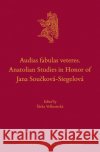
The publication Audias fabulas veteres. Anatolian Studies in Honor of Jana Součkova-Siegelova contains 31 contributions on current research topics in the fields of Ancient Anatolian and Near Eastern Languages, History, Religion, and Literature. The topics cover not only the main languages of this geographical area, such as Hittite, Luwian, Hattian, Hurrian, Akkadian, and Sumerian but also comparative linguistics and the latest methods of digitalising cuneiform texts, as well as religion, mythology and divinities, rituals, proverbs and analysis of geographical and historical...
The publication Audias fabulas veteres. Anatolian Studies in Honor of Jana Součkova-Siegelova contains 31 contributions on current researc...
The Religious Aspect of Warfare in the Ancient Near East, Greece and Rome is a volume dedicated to investigating the relationship between religion and war in antiquity in minute detail. The nineteen chapters are divided into three groups: the ancient Near East, Greece, and Rome. They are presented in turn and all possible aspects of warfare and its religious connections are investigated. The contributors focus on the theology of war, the role of priests in warfare, natural phenomena as signs for military activity, cruelty, piety, the divinity of humans in specific martial cases,...
The Religious Aspect of Warfare in the Ancient Near East, Greece and Rome is a volume dedicated to investigating the relationship between relig...
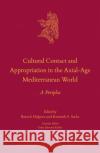
Karl Jaspers dubbed the period, 800-400 BCE, the Axial Age. Axial it was, for out of it emerged the idea of Greek culture, with its influence on Roman and later empires. Jaspers' Axial Age was the chrysalis of culturally-meaningful modernity. Trade expands intellectual horizons. The economic and political effects permeate such social domains as technology, language and worldview. In the last category, many issues take on an emotional freight - the birth of science, monotheism, philosophy, even theory itself. Cultural Contact and Appropriation in the Axial-Age Mediterranean World: A...
Karl Jaspers dubbed the period, 800-400 BCE, the Axial Age. Axial it was, for out of it emerged the idea of Greek culture, with its influence on Roman...
In The Babylonian Disputation Poems Enrique Jimenez studies a group of ancient Babylonian poems that feature discussions between animals and trees. Using intertextual parallels and comparison with similar works in other literatures, he espouses a new classification of the Babylonian disputation poems as parodies. After examining neighboring traditions of literary disputation, he argues that the Babylonian poems influenced them, and that some may have been translated from Akkadian to Aramaic, from Aramaic and Syriac to Arabic. In addition, The Babylonian Disputation Poems...
In The Babylonian Disputation Poems Enrique Jimenez studies a group of ancient Babylonian poems that feature discussions between animals and tr...
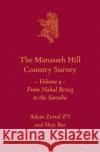
This book presents the results of a complete detailed survey of the north-eastern region of Samaria, mainly the northern area of the Jordan Valley, in the territory of Israel/Palestine. It is Volume 4 of the Manasseh Hill Country Survey publications. This project, in progress since 1978 and covering 2500 sq. km, is a thorough, metre-by-metre mapping of the archaeological-historical area between the River Jordan and the Sharon Plain, and between Nahal 'Iron and the north-eastern point of the Dead Sea. This territory is one of the most important in the country from the Biblical and...
This book presents the results of a complete detailed survey of the north-eastern region of Samaria, mainly the northern area of the Jordan Valley, in...
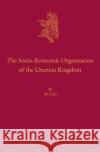
In The Socio-economic Organisation of the Urartian Kingdom, Ali Cifci presents a detailed study of the life of the highland communities of eastern Anatolia, Armenia and north-west Iran between the 9th and 6th centuries BC. In doing so, the author uses archaeological excavations, surveys, and textual evidence from both Urartian and Assyrian sources, as well as original ethnographic observations, within the context of the geographical setting of the Urartu Kingdom. The book investigates various aspects of the Urartian Kingdom from its economic resources and the movement of commodities...
In The Socio-economic Organisation of the Urartian Kingdom, Ali Cifci presents a detailed study of the life of the highland communities of east...