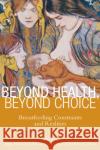
Current public health promotion of breastfeeding relies heavily on health messaging and individual behavior change. Women are told that "breast is best" but too little serious attention is given to addressing the many social, economic, and political factors that combine to limit women's real choice to breastfeed beyond a few days or weeks. The result: women's, infants', and public health interests are undermined. Beyond Health, Beyond Choice examines how feminist perspectives can inform public health support for breastfeeding. Written by authors from diverse disciplines,...
Current public health promotion of breastfeeding relies heavily on health messaging and individual behavior change. Women are told that "breast is bes...
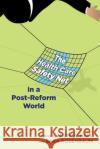
The Health Care Safety Net in a Post-Reform World examines how national health care reform will impact safety net programs that serve low-income and uninsured patients. The "safety net" refers to the collection of hospitals, clinics, and doctors who treat disadvantaged people, including those without insurance, regardless of their ability to pay. Despite comprehensive national health care reform, over twenty million people will remain uninsured. And many of those who obtain insurance from reform will continue to face shortages of providers in their communities willing or able to serve...
The Health Care Safety Net in a Post-Reform World examines how national health care reform will impact safety net programs that serve low-incom...
The feminist women's health movement of the 1960s and 1970s is credited with creating significant changes in the healthcare industry and bringing women's health issues to public attention. Decades later, women's health issues are more visible than ever before, but that visibility is made possible by a process of depoliticizationThe Vulnerable Empowered Woman assesses the state of women's healthcare today by analyzing popular media representations--television, print newspapers, websites, advertisements, blogs, and memoirs--in order to understand the ways in which breast cancer,...
The feminist women's health movement of the 1960s and 1970s is credited with creating significant changes in the healthcare industry and bringing wome...
How do we know when physicians practice medicine safely? Can we trust doctors to discipline their own? What is a proper role of experts in a democracy? In the Public Interest raises these provocative questions, using medical licensing and discipline to advocate for a needed overhaul of how we decide public good in a society dominated by private interest groups. Throughout the twentieth century, American physicians built a powerful profession, but their drive toward professional autonomy has made outside observers increasingly concerned about physicians' ability to separate their own...
How do we know when physicians practice medicine safely? Can we trust doctors to discipline their own? What is a proper role of experts in a democracy...
One of the most relevant social problems in contemporary American life is the continuing HIV epidemic in the Black population. With vivid ethnographic detail, this book brings together scholarship on the structural dimensions of the AIDS epidemic and the social construction of sexuality to assert that shifting forms of sexual stories-structural intimacies-are emerging, produced by the meeting of intimate lives and social structural patterns. These stories render such inequalities as racism, poverty, gender power disparities, sexual stigma, and discrimination as central not just to the...
One of the most relevant social problems in contemporary American life is the continuing HIV epidemic in the Black population. With vivid ethnographic...
Since the early twentieth century, politically engaged and socially committed U.S. health professionals have worked in solidarity with progressive movements around the world. Often with roots in social medicine, political activism, and international socialism, these doctors, nurses, and other health workers became comrades who joined forces with people struggling for social justice, equity, and the right to health. Anne-Emanuelle Birn and Theodore M. Brown bring together a group of professionals and activists whose lives have been dedicated to health internationalism. By presenting a...
Since the early twentieth century, politically engaged and socially committed U.S. health professionals have worked in solidarity with progressive mov...
Researchers commonly ask subjects to self-identify their race from a menu of preestablished options. Yet if race is a multidimensional, multilevel social construction, this has profound methodological implications for the sciences and social sciences. Race must inform how we design large-scale data collection and how scientists utilize race in the context of specific research questions. This landmark collection argues for the recognition of those implications for research and suggests ways in which they may be integrated into future scientific endeavors. It concludes on a prescriptive note,...
Researchers commonly ask subjects to self-identify their race from a menu of preestablished options. Yet if race is a multidimensional, multilevel soc...
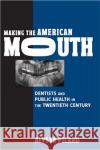
Why are Americans so uniquely obsessed with teeth? Brilliantly white, straight teeth? Making the American Mouth is at once a history of United States dentistry and a study of a billion-dollar industry. Alyssa Picard chronicles the forces that limited Americans' access to dental care in the early twentieth century and the ways dentists worked to expand that access--and improve the public image of their profession. Comprehensive in scope, this work describes how dentists' early public health commitments withered under the strain of fights over fluoride, mid-century social movements...
Why are Americans so uniquely obsessed with teeth? Brilliantly white, straight teeth? Making the American Mouth is at once a history of Uni...
As American Melancholy reveals, if you read about depression anywhere today--medical journal, popular magazine, National Institute of Mental Health pamphlet, or pharmaceutical company drug promotional literature--you will find three main pieces of information either explicitly stated or strongly implied: depression is a disease (like any other physical disease); it is extraordinarily prevalent in the world; and it occurs about twice as frequently in women as in men. Yet, depression was not classified as a disease until the 1980 publication of the American Psychiatric Association's...
As American Melancholy reveals, if you read about depression anywhere today--medical journal, popular magazine, National Institute of Mental He...
Unevenly distributed resources and rising costs have become enduring problems in the American health care system. Health care is more expensive in the United States than in other wealthy nations, and access varies significantly across space and social classes. James A. Schafer Jr. shows that these problems are not inevitable features of modern medicine, but instead reflect the informal organization of health care in a free market system in which profit and demand, rather than social welfare and public health needs, direct the distribution and cost of crucial resources. The Business...
Unevenly distributed resources and rising costs have become enduring problems in the American health care system. Health care is more expensive in the...