The Sunni-Shi'a schism is often framed as a dispute over the identity of the successor to Muhammad. In reality, however, this fracture only materialized a century later in the important southern Iraqi city of Kufa (present-day Najaf). This book explores the birth and development of Shi'i identity. Through a critical analysis of legal texts, whose provenance has only recently been confirmed, the study shows how the early Shi'a carved out independent religious and social identities through specific ritual practices and within separate sacred spaces. In this way, the book addresses two seminal...
The Sunni-Shi'a schism is often framed as a dispute over the identity of the successor to Muhammad. In reality, however, this fracture only materializ...
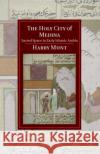
This is the first book-length study of the emergence of Medina, in modern Saudi Arabia, as a widely venerated sacred space and holy city over the course of the first three Islamic centuries (the seventh to ninth centuries CE). This was a dynamic period that witnessed the evolution of many Islamic political, religious and legal doctrines, and the book situates Medina's emerging sanctity within the appropriate historical contexts. The book focuses on the roles played by the Prophet Mu ammad, by the Umayyad and early Abbasid caliphs and by Muslim legal scholars. It shows that Medina's emergence...
This is the first book-length study of the emergence of Medina, in modern Saudi Arabia, as a widely venerated sacred space and holy city over the cour...
This book considers an important and largely neglected area of Islamic law by exploring how medieval Muslim jurists resolved criminal cases that could not be proven beyond a doubt. Intisar A. Rabb calls into question a controversial popular notion about Islamic law today, which is that Islamic law is a divine legal tradition that has little room for discretion or doubt, particularly in Islamic criminal law. Despite its contemporary popularity, that notion turns out to have been far outside the mainstream of Islamic law for most of its history. Instead of rejecting doubt, medieval Muslim...
This book considers an important and largely neglected area of Islamic law by exploring how medieval Muslim jurists resolved criminal cases that could...
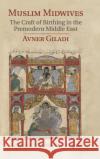
This book reconstructs the role of midwives in medieval to early modern Islamic history through a careful reading of a wide range of classical and medieval Arabic sources. The author casts the midwife's social status in premodern Islam as a privileged position from which she could mediate between male authority in patriarchal society and female reproductive power within the family. This study also takes a broader historical view of midwifery in the Middle East by examining the tensions between learned medicine (male) and popular, medico-religious practices (female) from early Islam into the...
This book reconstructs the role of midwives in medieval to early modern Islamic history through a careful reading of a wide range of classical and med...
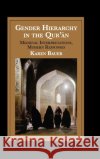
This book explores how medieval and modern Muslim religious scholars ('ulam ') interpret gender roles in Qur' nic verses on legal testimony, marriage, and human creation. Citing these verses, medieval scholars developed increasingly complex laws and interpretations upholding a male-dominated gender hierarchy; aspects of their interpretations influence religious norms and state laws in Muslim-majority countries today, yet other aspects have been discarded entirely. Karen Bauer traces the evolution of their interpretations, showing how they have been adopted, adapted, rejected, or replaced over...
This book explores how medieval and modern Muslim religious scholars ('ulam ') interpret gender roles in Qur' nic verses on legal testimony, marriage,...
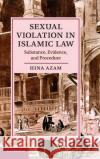
This book provides a detailed analysis of Islamic juristic writings on the topic of rape and argues that classical Islamic jurisprudence contained nuanced, substantially divergent doctrines of sexual violation as a punishable crime. The work centers on legal discourses of the first six centuries of Islam, the period during which these discourses reached their classical forms, and chronicles the juristic conflict over whether or not to provide monetary compensations to victims. Along with tracing the emergence and development of this conflict over time, Hina Azam explains evidentiary...
This book provides a detailed analysis of Islamic juristic writings on the topic of rape and argues that classical Islamic jurisprudence contained nua...
A revisionist reading of Ottoman history during the reign of Suleyman the Magnificent (1520-66), examining the life of a bureaucrat, Celalzade Mustafa.
A revisionist reading of Ottoman history during the reign of Suleyman the Magnificent (1520-66), examining the life of a bureaucrat, Celalzade Mustafa...