Elizabeth Kent (1790-1861) lived in London, but wanted to live in the country. Dismayed at the number of pot-plants given to her which failed to thrive, she published this useful guide to container or 'portable' gardening in 1823. She had taught herself botany and foreign languages, and her sister's marriage to the radical poet and journalist Leigh Hunt brought her into contact with the Romantic circles. The book combines practical instruction on how to select plants which will thrive in containers, and in the polluted air of cities, with quotations on gardening and flowers from ancient as...
Elizabeth Kent (1790-1861) lived in London, but wanted to live in the country. Dismayed at the number of pot-plants given to her which failed to thriv...
This treatise on the tea bush and the consumption of tea was published in 1772 by John Coakley Lettsom (1744 1815), a physician and philanthropist, whose first action on inheriting his family plantation in 1767 was to free all its slaves. He practised medicine in London, and wrote on topics which he felt would benefit society. The book begins with a description of the plant, using the Linnaean system, discussing tea cultivation and harvesting in China, and the preparation of the leaves for use locally and abroad. In Part II, Lettsom turns to the medical uses of tea, lamenting that so little...
This treatise on the tea bush and the consumption of tea was published in 1772 by John Coakley Lettsom (1744 1815), a physician and philanthropist, wh...
Employed early in his career by Sir Joseph Banks, the botanist John Lindley (1799 1865) is best known for his recommendation that Kew Gardens should become a national botanical institution, and for saving the Royal Horticultural Society from financial disaster. As an author, he is best remembered for his works on taxonomy and classification. A partisan of the 'natural' system rather than the Linnaean, Lindley published this 1841 work, the fourth edition of his Outline of the First Principles of Botany, under a new title to emphasise not only that it was 'much extended, and, it is hoped,...
Employed early in his career by Sir Joseph Banks, the botanist John Lindley (1799 1865) is best known for his recommendation that Kew Gardens should b...
Employed early in his career by Sir Joseph Banks, the botanist John Lindley (1799 1865) is best known for his recommendation that Kew Gardens should become a national botanical institution, and for saving the Royal Horticultural Society from financial disaster. As an author, he is best remembered for his works on taxonomy and classification. A partisan of the 'natural' system of Jussieu rather than the Linnaean, Lindley writes, in his preface to this 1830 work, that it was originally created for his own use, to avoid having recourse to 'rare, costly and expensive publications' available only...
Employed early in his career by Sir Joseph Banks, the botanist John Lindley (1799 1865) is best known for his recommendation that Kew Gardens should b...
Among the many interests of Swiss philosopher Jean-Jacques Rousseau (1712-78) was botany. These letters 'addressed to a lady' came to the attention of Thomas Martyn, professor of botany at the University of Cambridge, who thought that 'if they were] translated into English, they might be of use to such ... as wished to amuse themselves with natural history'. However, when the translation was done, he 'perceived that the foundation only being laid by the ingenious author, it could be of little service, without raising the superstructure'. Martyn's 1785 publication, of which we have reissued...
Among the many interests of Swiss philosopher Jean-Jacques Rousseau (1712-78) was botany. These letters 'addressed to a lady' came to the attention of...
This 1878 account of a scientific tour of Morocco and the Atlas mountains in 1871 was compiled from the journals of Sir Joseph Hooker (1817 1911) and his travelling companion, the geologist John Ball (1818 89). Their plan had been for Hooker to publish their findings soon after the journey, but his work as Director of Kew Gardens and President of the Royal Society, and Ball's frequent absences abroad, as well as his own writing commitments, caused delays. However, they argue that their information is unlikely to be out of date when, from a comparison with earlier accounts, 'no notable change...
This 1878 account of a scientific tour of Morocco and the Atlas mountains in 1871 was compiled from the journals of Sir Joseph Hooker (1817 1911) and ...
The political writer William Cobbett (1763 1835) was also a farmer 'bred at the plough's tail', who took a keen and observant interest in agriculture and gardening throughout his life. (His Cottage Economy and Rural Rides, among other works, are also reissued in the Cambridge Library Collection.) In 1792 he left England, where his views made him very unpopular, for France and then America, where he lived until 1800; in 1817 he fled to America again, leasing a farm on Long Island for two years. This 1821 book is written in Cobbett's characteristically robust style: his purpose is 'to cause the...
The political writer William Cobbett (1763 1835) was also a farmer 'bred at the plough's tail', who took a keen and observant interest in agriculture ...
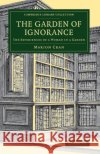
Marion Cran (1875-1942), born in South Africa, passed most of her life in England, and, from 1910 until her death, lived and gardened in a house called 'Coggers' near Benenden in Kent. She was a prolific writer of books and articles on gardening, and was the first radio broadcaster on gardening in Britain. This 1913 work combines prescriptive gardening advice with autobiography. She admits that, although she had longed to live in the country, 'I knew nothing at all of gardening; never did anyone know less.' When she first arrived at the 'rented three shaggy acres of ground in Surrey' in which...
Marion Cran (1875-1942), born in South Africa, passed most of her life in England, and, from 1910 until her death, lived and gardened in a house calle...
The first career of Robert Sweet (1783 1835) was as a gardener in private employment and as a nurseryman. He turned in 1826 to botanical writing, having already published Hortus suburbanus Londinensis (1818), and the first of the five-volume Geraniaceae (1820 30). The first edition of this work was published in 1826, and this revised second edition in 1830. Sweet uses Jussieu's 'natural' system of classification, but concedes that 'we still consider the addition of the Linnaean classes and orders, of great use, as they are so readily attained by the young Botanist'. He provides nine...
The first career of Robert Sweet (1783 1835) was as a gardener in private employment and as a nurseryman. He turned in 1826 to botanical writing, havi...
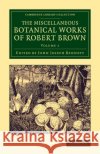
The botanist Robert Brown (1773 1858) is regarded as one of the most significant figures in the advancement of plant science in the nineteenth century. After studying at Aberdeen and Edinburgh, he made the acquaintance of Sir Joseph Banks via William Withering, and in 1801 was appointed as naturalist on Matthew Flinders' expedition to Australia. Brown made extensive collections of animals and minerals, but his 3,400 plant specimens from Australia, Tasmania and Timor were the foundation of his work for the rest of his life, as an active member of the Linnean Society, as Banks's librarian, and...
The botanist Robert Brown (1773 1858) is regarded as one of the most significant figures in the advancement of plant science in the nineteenth century...