This is a definitive study of a major intellectual movement of nineteenth-century Spain. The 'harmonic rationalism' of the German Karl Christian Friedrich Krause (1781 1832), a philosophy dedicated to an ideal of universal brotherhood, had an unexpectedly powerful influence upon Spanish history, politics, education and literature in the late nineteenth century and beyond. Concerned primarily with the phase in which this all-embracing movement appears most homogeneous - between the revolution of 1854 and the early days of the Restoration - Professor Lopez-Morillas clearly outlines the Krausist...
This is a definitive study of a major intellectual movement of nineteenth-century Spain. The 'harmonic rationalism' of the German Karl Christian Fried...
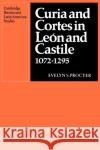
In the twelfth century, curia regis was the name given to the assembly, whether in England, France or the kingdoms of Spain, which helped the monarch to govern. In its largest form, such an assembly consisted of members of the royal family, royal household officials and the lay and ecclesiastical magnates of the kingdom. This book analyses the composition and function of these solemn assemblies in Leon and Castile, two kingdoms which were united under one monarch from 1072 until 1157 and again after 1230. The author traces the development of a representative assembly in Leon-Castile, from the...
In the twelfth century, curia regis was the name given to the assembly, whether in England, France or the kingdoms of Spain, which helped the monarch ...
This book, originally published in 1982, was the first detailed study of black slavery in Portugal during the fifteenth and sixteenth centuries, when the Portuguese brought Europe into contact with black Africa and originated the Atlantic slave-trade. Portugal was the first European society to have a considerable black population, and the relations established between the white and black populations set a pattern that had effects throughout the Atlantic world. Through extensive analysis, this book sheds light on Portuguese slave laws, geographical distribution and the occupations of slaves...
This book, originally published in 1982, was the first detailed study of black slavery in Portugal during the fifteenth and sixteenth centuries, when ...
Julio Cortazar is one of the best-known successful Latin American writers. His work has been widely translated and this 1980 book is a clear and detailed study of his four major novels. Steven Boldy recognises the complexity, the 'nerve centres of contradiction and tension' of Cortazar's novels, which resist a single dogmatic interpretation, but Dr Boldy's sympathetic analysis allows the reader to approach an understanding of the individual novels and the way these are linked by an underlying thematic pattern. Cortazar's work is seen in the context of its European and Argentinian background:...
Julio Cortazar is one of the best-known successful Latin American writers. His work has been widely translated and this 1980 book is a clear and detai...
Originally published in 1988, this book offers an important insight into the so-called 'martyrdom movement' that occurred in Cordoba in the 850s. It includes a biographical treatment of the ninth-century Cordoban priest Eulogius, who witnessed and recorded the martyrdoms of over forty Christians at the hands of Muslim authorities. Eulogius' hagiographical task was complicated by the fact that many of the Christians in Cordoba at the time resented the provocative actions of the martyrs that led to their executions, claiming that their public denunciations of Islam were inappropriate given the...
Originally published in 1988, this book offers an important insight into the so-called 'martyrdom movement' that occurred in Cordoba in the 850s. It i...