The Rabha's inhabit the plains on both sides of the Brahmaputra river in Assam, in the North East of India. Their language is Rabha, a member of the Tibeto-Burman language family. This is the first ever comprehensive grammar of the Rongdani dialect of Rabha, as spoken in, a.o., the Rabha heartlands. Based on extensive field work by the author, this work is yet another significant step in the meticulous task of piecing together the jigsaw of Himalayan languages as undertaken by George van Driem and his team. Given the steady decline of the Rabha language in favour of Assamese, all those...
The Rabha's inhabit the plains on both sides of the Brahmaputra river in Assam, in the North East of India. Their language is Rabha, a member of the T...
The Lepcha language has been shrouded in a veil of tantalising mystique ever since Colonel George Mainwaring in the 1870s disseminated the myth that Lepcha was the most perfect of tongues and represented the primordial language of men and fairies. The present book is the first ever comprehensive reference grammar of this language, spoken by the indigenous tribal people of Darjeeling, Sikkim and Kalimpong. Some popular lore about Lepcha has a firm basis in fact, however. Lepcha represents a branch unto itself within the Tibeto-Burman languages. Lepcha is written in its own unique script. This...
The Lepcha language has been shrouded in a veil of tantalising mystique ever since Colonel George Mainwaring in the 1870s disseminated the myth that L...
The present work, a grammar of Dhimal, fills an important void in the documentation of the vast and ramified Tibeto-Burman language family. Dhimal, a little known and endangered tongue spoken in the lowlands of southeastern Nepal by about 20,000 individuals, is detailed in this work. With data gathered in the village of Āṭhiyābārī, the author crafts a readable description of the western dialect, using over 1000 examples to illustrate usage. Included in this reference work are seventeen texts, riddles, songs and a Dhimal-English glossary. Joining other recent...
The present work, a grammar of Dhimal, fills an important void in the documentation of the vast and ramified Tibeto-Burman language family. Dhimal, a ...
A work that will be of interest to those interested in typology, language history, and contact induced change, this book documents the radical restructuring of Anong over the last 40 years under intense contact with Lisu.
A work that will be of interest to those interested in typology, language history, and contact induced change, this book documents the radical restruc...
A Grammar of Tshangla is the first major linguistic description of Tshangla, a Tibeto-Burman language spoken in Bhutan, northeast India, and southwest China. Written from a functional-typological perspective, it contains a wealth of illustrative examples both from elicited data and from spontaneously generated texts. It is a truly comprehensive description, including sections on phonology, lexicon, morphophonemics, morphosyntactic structure, clause-concatenating constructions, as well as discourse-pragmatic features. The volume will be of interest to language students, and to linguists...
A Grammar of Tshangla is the first major linguistic description of Tshangla, a Tibeto-Burman language spoken in Bhutan, northeast India, and so...
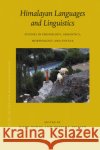
Himalayan Languages and Linguistics gathers together nine outstanding and original contributions on the Tibeto-Burman and Indo-Aryan languages of this important and culturally diverse mountainous area. Filling a marked gap in our understanding of the languages of this underdocumented region, the collection offers a snapshot of the state of the field of Himalayan language research and linguistic comparison. Drawing on primary fieldwork in China, India, Nepal and Pakistan, as well as on comparative sources, the new analyses outlined in these contributions will interest a readership of...
Himalayan Languages and Linguistics gathers together nine outstanding and original contributions on the Tibeto-Burman and Indo-Aryan languages ...
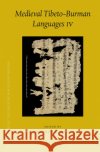
While providing unique and detailed information on early Tibeto-Burman languages and their contact and relationship to other languages, this book at the same time sets out to establish a field of Tibeto-Burman comparative-historical linguistics based on the classical Indo-European model. The volume includes six papers on Tangut, three on Tibetan and one each on the languages Mon, Burmese, Lepcha, Pyu, Nam, and Yi. Building a bridge between linguistic and literary research the range of studies treats phonology, decipherment, literature and religion.
While providing unique and detailed information on early Tibeto-Burman languages and their contact and relationship to other languages, this book at t...
A Grammar of Prinmi represents the first in-depth description of a Tibeto-Burman language spoken by the Pǔmǐ Nationality and the Zang Nationality (in Mulǐ, Sichuan) in southwest China. Prinmi belongs to the Qiangic branch and is closely related to the extinct language of Tangut. Picus Ding examines in the grammar the phonology (both segmental and suprasegmental), morphology, syntax and information structure of Prinmi, with two sample texts and an English-Prinmi glossary provided in appendices. Some noteworthy features of Prinmi include a wealth of clitics (appearing as...
A Grammar of Prinmi represents the first in-depth description of a Tibeto-Burman language spoken by the Pǔmǐ Nationality and the Zang...
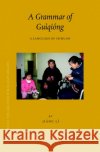
In A Grammar of Guiqiong, Jiāng Li describes the grammar of Guiqiong, a hitherto undocumented language spoken by alpine people in Kāngding county, China. Guiqiong has a lot to offer in its phonology, verbal and nominal morphology, syntax and glossary, distinguishing itself from the neighbouring Tibetan, Chinese, Qiangic and Loloish languages. The newly discovered features of Guiqiong include breathy vs. modal voice, indefinite number, ablative, ergative, instrumental, dative and genitive case markers, topic and emphatic markers, the diminutive suffixes, the pronominal and...
In A Grammar of Guiqiong, Jiāng Li describes the grammar of Guiqiong, a hitherto undocumented language spoken by alpine people in Kān...
A Grammar of rGyalrong, Jiǎomùzú (Kyom-kyo) dialects. A Web of Relations is the first full length description in English of a rGyalrong language. Marielle Prins describes the phonology, morphology and syntax for one variety of these under-researched and threatened languages. From a host of examples and texts emerges a clear picture of natural language use, creating an enduring record and a great resource for comparative and diachronic linguists. Careful analysis of the data uncovers the web of relations between individuals and all entities in their environment, to...
A Grammar of rGyalrong, Jiǎomùzú (Kyom-kyo) dialects. A Web of Relations is the first full length description in English of a...