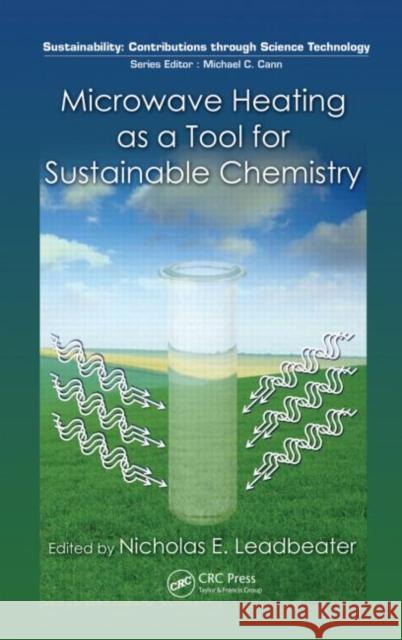
With a focus on the fast-growing use of microwave heating as a tool for sustainable chemistry, this text covers an extremely broad range of related topics, emphasizing several currently popular areas. Detailing its use as an enabling technology, especially in organic chemistry, the author cites the key advantages of microwave over conventional heating, including shorter reaction times, higher product yields, and enhanced selectivity. Unlike other books on microwave heatinga "which generally focus on just one particular area, such as organic or medicinal chemistrya "this application-driven...
With a focus on the fast-growing use of microwave heating as a tool for sustainable chemistry, this text covers an extremely broad range of related...
Allowing many chemical reactions to be completed within minutes, microwave heating has revolutionized preparative chemistry. As a result, this technology has been widely adopted in both academic and industrial laboratories. Integrating microwave-assisted chemistry into undergraduate laboratory courses enables students to perform a broader range of reactions in the allotted lab period. As a result, they can be introduced to chemistry that would otherwise have been inaccessible due to time constraints (for example, the need for an overnight reflux). Laboratory Experiments Using...
Allowing many chemical reactions to be completed within minutes, microwave heating has revolutionized preparative chemistry. As a result, this tech...