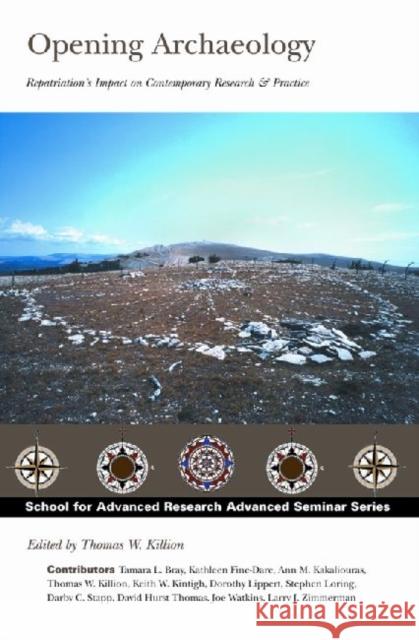
In 1989-90, Congress enacted two laws, the National Museum of the American Indian Act and the Native American Graves Protection and Repatriation Act, that required museums and other repositories of Native American human remains and cultural items to consult with, share information about, and return some items to federally recognized Indian tribes and Native Alaskan and Hawaiian communities. What effects have these laws had on anthropological practice, theory, and education in the United States? In 2004-2005, the School for Advanced Research and the Society for Applied Anthropology gathered...
In 1989-90, Congress enacted two laws, the National Museum of the American Indian Act and the Native American Graves Protection and Repatriation Ac...
To date, the notion of repatriation has been formulated as a highly polarized debate with museums, archaeologists, and anthropologists on one side, and Native Americans on the other. This volume offers both a retrospective and a prospective look at the topic of repatriation. By juxtaposing the divergent views of native peoples, anthropologists, museum professionals, and members of the legal profession, it illustrates the complexity of the repatriation issue.
To date, the notion of repatriation has been formulated as a highly polarized debate with museums, archaeologists, and anthropologists on one side, an...