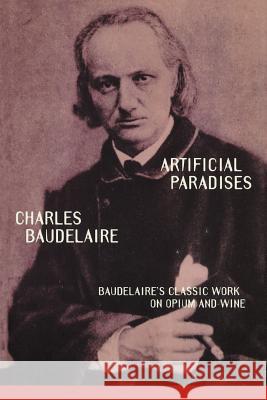
At the time of its release in 1860, Charles Baudelaire's "Artificial Paradises (Les Paradis Artificiels)" met with immediate praise. One of the most important French symbolists, Baudelaire led a debauched, violent, and ultimately tragic life, dying an opium addict in 1867. This book, a response to Thomas De Quincey's Confessions of an Opium Eater, serves as a memoir of Baudelaire's last years.
In this beautifully wrought portrait of the effects of wine, opium, and hashish on the mind, Baudelaire captures the dreamlike visions he experienced during his narcotic trances. These...
At the time of its release in 1860, Charles Baudelaire's "Artificial Paradises (Les Paradis Artificiels)" met with immediate praise. One of the most i...
The poems of The Flowers of Evil were written in Paris at a time of revolution and accelerating change - the beginning of mass culture, the rise of consumerism and the middle-class, the radical redevelopment of the city by Haussmann - and they provide many parallels with the malaise and uncertainties of contemporary capitalist societies. Jan Owen's masterly translation captures all of this in a selection that includes many of Baudelaire's best known poems - including those banned from 1857 edition - as well as some less familiar ones, with the volume leading up to his great long poem, 'The...
The poems of The Flowers of Evil were written in Paris at a time of revolution and accelerating change - the beginning of mass culture, the rise of co...
Esta recopilacion compuesta de ineditos y piezas condenadas fue publicada en Bruselas, bajo el cuidado de Poulet-Malassis, amigo de Baudelaire con un pie de imprenta apocrifo: Amsterdam, a l'Enseigne du Coq, precedida por un simbolico frontispicio de Felicien Rops."
Esta recopilacion compuesta de ineditos y piezas condenadas fue publicada en Bruselas, bajo el cuidado de Poulet-Malassis, amigo de Baudelaire con un ...