By the time Joseph Conrad (1857 1924) produced this novel in 1907, terrorism had torn its way through London: Victoria station had been partially destroyed, the House of Commons damaged, and Scotland Yard attacked with dynamite. Conrad's story is set in 1886, at the height of these troubles, and was inspired by the 1894 attempt to bomb Greenwich Observatory. Written just after Nostromo (1904), it is a marked departure from Conrad's usual seafaring form and plunges the reader into the claustrophobic, grimy world of late nineteenth-century London. Mr Adolf Verloc anarchist, spy, and purveyor of...
By the time Joseph Conrad (1857 1924) produced this novel in 1907, terrorism had torn its way through London: Victoria station had been partially dest...
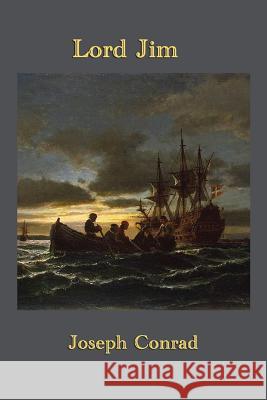
Jim, a young British seaman, becomes first mate on the Patna, a ship full of pilgrims travelling to Mecca for the hajj. When the ship starts rapidly taking on water and disaster seems imminent, Jim joins his captain and other crew members in abandoning the ship and its passengers. He is publicly censured for this action and the novel follows his later attempts at coming to terms with his past.
Jim, a young British seaman, becomes first mate on the Patna, a ship full of pilgrims travelling to Mecca for the hajj. When the ship starts rapidly t...
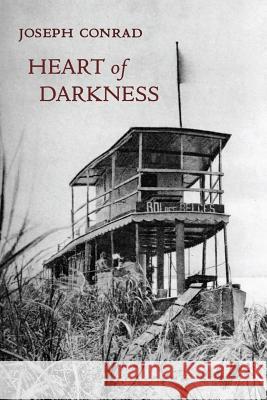
This is a fine edition of Jospeh Conrads most acclaimed novel, printed on cream, acid-free paper. As the narrator Marlow journeys ever deeper into the Congos heart of darkness, so he also penetrates deeper into the folly of western corruption and absurdity that characterises both the collision of European and African cultures, and the conflicts in his own inner nature. The story that tells of Marlows mission to find the mysterious but missing Mr Kurtz, as he travels along the Congo River into the interior of the dark continent, tells also a second dark story of what happens when white...
This is a fine edition of Jospeh Conrads most acclaimed novel, printed on cream, acid-free paper. As the narrator Marlow journeys ever deeper into the...
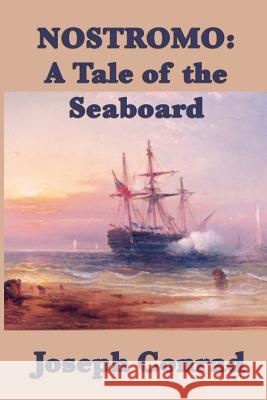
Conrad set his novel in the mining town of Sulaco, an imaginary port in the occidental region of the imaginary country of Costaguana. Costaguana has a long history of tyranny, revolution and warfare, but has recently experienced a period of stability under the dictator Ribiera. The book has more fully developed characters than any other of his novels, but two characters dominate the narrative: Senor Gould and the eponymous anti-hero, the "incorruptible" Nostromo.
Conrad set his novel in the mining town of Sulaco, an imaginary port in the occidental region of the imaginary country of Costaguana. Costaguana has a...
The five stories brought together in Tales of Unrest (1898) mark a turning point in the writer's career. Conrad's first short story collection evidences a writer firmly in control of his new craft staking a claim to diverse cultural and fictional territories. The introduction situates the writing of these stories in Conrad's career and discusses their sources and contemporary reception. The explanatory notes identify literary and historical references and real-life places, and indicate influences. Two maps and six illustrations enrich the explanatory matter. The essay on the text lays out the...
The five stories brought together in Tales of Unrest (1898) mark a turning point in the writer's career. Conrad's first short story collection evidenc...
Within the Tides (1915) was the last volume of short stories published during Conrad's lifetime. In this book, the stories are published for the first time in a critical edition based upon a thorough analysis of the original documents, and the critical texts have been emended so as to include Conrad's later revisions. The 'Introduction' discusses Conrad's main sources and influences, places the stories in their contemporary contexts and traces the volume's contemporary reception. The essay on the texts and the 'Apparatus' document the history of composition and publication and detail the...
Within the Tides (1915) was the last volume of short stories published during Conrad's lifetime. In this book, the stories are published for the first...
Joseph Conrad's short novel The Shadow-Line: A Confession (1917) is one of the key works of early twentieth-century fiction. This edition, established through modern textual scholarship, and published as part of the Cambridge Edition of the Works of Joseph Conrad, presents Conrad's only major work written during the First World War and its 1920 preface in forms more authoritative than any so far printed. Correspondence reveals that the part- and chapter-divisions present in the historical editions lack authorial sanction, and this edition of The Shadow-Line offers a continuous text for the...
Joseph Conrad's short novel The Shadow-Line: A Confession (1917) is one of the key works of early twentieth-century fiction. This edition, established...