Paul Ricoeur is widely regarded as one of the most distinguished philosophers of our time. In The Rule of Metaphor he seeks 'to show how language can extend itself to its very limits, forever discovering new resonances within itself'. Recognizing the fundamental power of language in constructing the world we perceive, it is a fruitful and insightful study of how language affects how we understand the world, and is also an indispensable work for all those seeking to retrieve some kind of meaning in uncertain times.
Paul Ricoeur is widely regarded as one of the most distinguished philosophers of our time. In The Rule of Metaphor he seeks 'to show how...
Paul Ricoeur, Bond Harris, Jacqueline Bouchard Spurlock, Pol Vandevelde
In 1950, Paul Ricoeur published his translation of Edmund Husserl's Ideen I under the title Idees directrices pour une phenomenologie. It became the handbook and key to the father of phemenology. This combination of Husserl and Ricoeur should be of interest to both professors and students.
In 1950, Paul Ricoeur published his translation of Edmund Husserl's Ideen I under the title Idees directrices pour une phenomenologie. It became the h...
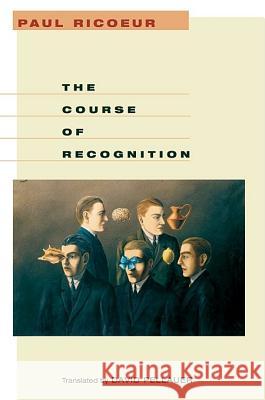
Recognition, though it figures profoundly in our understanding of objects and persons, identity and ideas, has never before been the subject of a single, sustained philosophical inquiry. This work, by one of contemporary philosophy's most distinguished voices, pursues recognition through its various philosophical guises and meanings - and, through the 'course of recognition,' seeks to develop nothing less than a proper hermeneutics of mutual recognition. Originally delivered as lectures at the Institute for the Human Sciences at Vienna, the essays collected here consider recognition in three...
Recognition, though it figures profoundly in our understanding of objects and persons, identity and ideas, has never before been the subject of a sing...





![Reflections on the Just [Standard Large Print 16 Pt Edition] Paul Ricoeur, David Pellauer 9780369315823 ReadHowYouWant](/9780369315823_reflections_on_the_just_standard_large_print_16_pt_edition.jpg "Reflections on the Just [Standard Large Print 16 Pt Edition]")