Bluebirds by Catulle MendEs (1841-1909), here delightfully translated for the first time into English by Brian Stableford, is fascinating, not only because it illustrates a particular evolution within the pattern of the author's own works, but because that pattern reflects a more general one associated with the evolution from the French Romanticism of the first half of the nineteenth century to the Decadent and Symbolist Movements of the fin-de-siEcle. MendEs was one of the key figures in the latter phases of that process of development, launching his literary career in the 1860s under the...
Bluebirds by Catulle MendEs (1841-1909), here delightfully translated for the first time into English by Brian Stableford, is fascinating, not only...
The Man Who Married a Mermaid (1949) tells the picaresque story of a sailor, PEre Olifus, who first marries a mermaid, then embarks upon a series of voyages to a semi-mythical Far East where he enjoys various economic opportunities, but remains plagued by the vengeful astral form of the mermaid wife he left behind. Master storyteller Alexandre Dumas teamed up with Paul Lacroix intending to produce a series of magical tales, of which this wry, sarcastic fable of supernaturally-punished infidelity was the first. When the project failed, Lacroix expanded the story into a novella, which...
The Man Who Married a Mermaid (1949) tells the picaresque story of a sailor, PEre Olifus, who first marries a mermaid, then embarks upon a series o...
The Angel Asrael (1832) is the most revealing and the purest of S. Henry Berthoud's fantasies, and a significant early contribution to what became the great Romantic and Symbolist tradition of "literary satanism," in which writers deliberately adopted a stance removed from orthodox Christianity in order to reappraise the character of Satan. As might be expected of a devout writer, Berthoud shows no sympathy for Satan, who remains an archetype of vitriolic nastiness, but in his characterization of the rebel, like John Milton, he cannot help express a certain admiration for his overweening...
The Angel Asrael (1832) is the most revealing and the purest of S. Henry Berthoud's fantasies, and a significant early contribution to what became ...
Jean Lorrain, one of the leading figures of the Decadent Movement, was a master of the conte cruel. Presented here, for the first time in English, are ten such tales: stories of princes and princesses; mock-fairytales that seem to pervert the innocence of their settings with a triumphant immorality, plunging the reader into an atmosphere of voluptuousness and sensuality.
-Whoever has not believed as a child, - wrote the author, -will not dream as a young man; it is necessary to think, on the threshold of life, of weaving beautiful tapestries of dreams in order to decorate our abode...
Jean Lorrain, one of the leading figures of the Decadent Movement, was a master of the conte cruel. Presented here, for the first time in English, ...
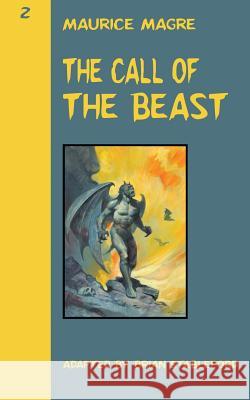
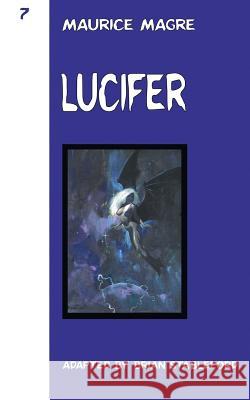
Maurice Magre (1877-1941) was one of the most far-ranging and extravagant French writers of fantastic fiction in the first half of the 20th century, and perhaps the finest of them, because of the fertility and versatility of his imagination and the manner and purpose for which he deployed it.
This volume, the second of a series of twelve dedicated to Magre's works, offers three novellas: Stabbed Doves The Tender Comrades and The Call of the Beast written between 1917 and 1920. Having tried sex and opium as roads to the ideal and found them wanting, Magre found a further...
Maurice Magre (1877-1941) was one of the most far-ranging and extravagant French writers of fantastic fiction in the first half of the 20th century...