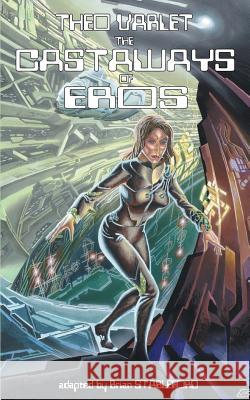
Aurore Lescure, the first woman astronaut, who starred in The Xenobiotic Invasion, returns in this ground-breaking novel about the first successful interplanetary flight to the planetoid Eros. There, the intrepid explorers discover that evolution on Eros has taken a different turn than on Earth, producing a species of intelligent dinosaurs... The notion of a Japanese-financed rocket piloted by a French female astronaut was a radical one in 1932, when this daring and original novel was written. With The Castaways of Eros, Theo Varlet hoped to promote the potential of rocket technology to...
Aurore Lescure, the first woman astronaut, who starred in The Xenobiotic Invasion, returns in this ground-breaking novel about the first successful in...
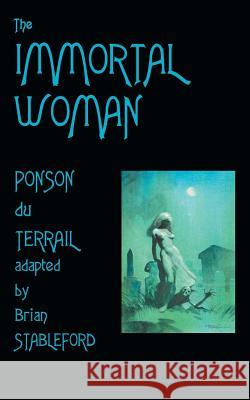
In 1675, a female vampire possessing the secret of immortality was burned alive. Forty-five years later, during a dinner at the table of the French Regent, her then-lover, Marquis de la Roche-Maubert, discovers that another guest, Chevalier d'Esparron, is in love with the same immortal woman. However, her attraction to him is not to satisfy her hunger for blood, but to implement one of the greatest secrets of alchemy: the transmutation of lead into gold Pierre-Alexis Ponson du Terrail (1829-1871) was a French popular writer and a master of the serialized novel, having penned over 200 such...
In 1675, a female vampire possessing the secret of immortality was burned alive. Forty-five years later, during a dinner at the table of the French Re...
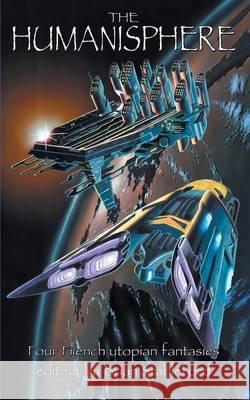
The Eternal Flame (1931) and its sequel Pink Sky (1933) (included in this volume) are two of the few novels about scientific discovery to focus on the economic implications of such discoveries, including publicity, capitalization and the conflict of vested interests. It was a pioneering work in its development of those themes, especially with regard to the harnessing of atomic energy. It is also original in the manner in which it poses the question of the ultimate objectives of scientific and social progress. Michel Corday's experiences during World War I caused him thereafter to become an...
The Eternal Flame (1931) and its sequel Pink Sky (1933) (included in this volume) are two of the few novels about scientific discovery to focus on the...
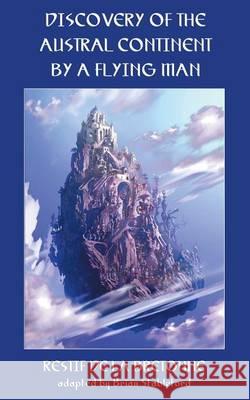
In a Thousand Years (1884) is solidly set in the tradition of "euchronian" fiction, arguing that political reform goes hand in hand with technological progress. Calvet paints a ground-breaking picture of a world transformed by prolifically-distributed electric power and aerial transportation, demonstrating an attention to utilitarian detail rare among other constructors of futuristic utopias. Calvet's characters do not experience the future of the year 2880 as if it were a vision, but have the subjective impression that they have been physically displaced by suspended animation, even...
In a Thousand Years (1884) is solidly set in the tradition of "euchronian" fiction, arguing that political reform goes hand in hand with technological...
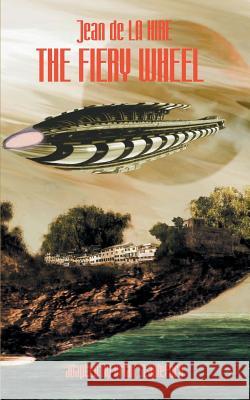
In 1908, Jean de La Hire, the creator of The Nyctalope, penned The Fiery Wheel, a classic space opera in which five Earthmen are abducted in the eponymous spacecraft by aliens from Saturn, and taken to Venus and Mercury where they encounter strange lifeforms, before returning to Earth through mind transfer. The Fiery Wheel is the first work of fiction to feature the theme of "alien abduction," all the more remarkable because such abductions are achieved by means of a vehicle resembling the "flying disks" or "flying saucers" later credited with this phenomena."It is an essential piece in the...
In 1908, Jean de La Hire, the creator of The Nyctalope, penned The Fiery Wheel, a classic space opera in which five Earthmen are abducted in the epony...
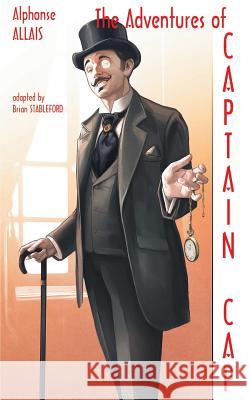
Captain Cap was the fictitious mouthpiece that Alphonse Allais used to tell the tallest of his tall stories and develop his most exotic story ideas, including the majority of those that would nowadays be considered science-fictional. Allais liked to keep up with contemporary developments in science, and was ever ready to adapt ideas therefrom -- especially ideas that seemed to pose a challenge to common sense -- into the humorous newspaper articles with which he made his living and his reputation. By virtue of this habit of picking up such trifles, and adding absurd twists to them, Allais...
Captain Cap was the fictitious mouthpiece that Alphonse Allais used to tell the tallest of his tall stories and develop his most exotic story ideas, i...
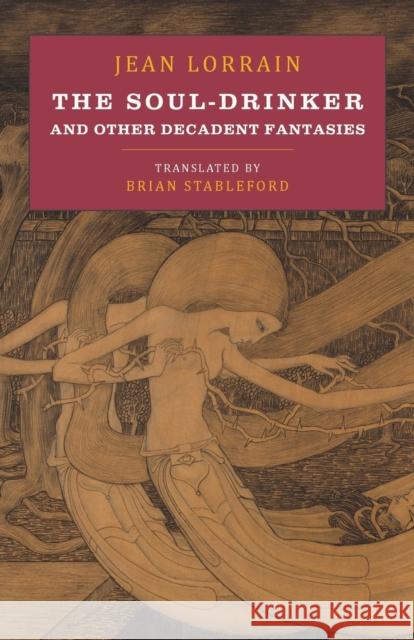
No other writer of the fin-de-siEcle period undertook a more elaborate exploration of perversities and abnormalities than Jean Lorrain, and no one else went as far afield in the search for discoveries of that curious kind than he did. Perhaps, given the variety of human behavior, it was not possible for him actually to invent perversities that no one actually practiced, or were even tempted to practice, but what is certain is that no one ever examined the anatomy of eroticism, including its wilder extremes, with a greater analytical fervor.
In this, the second collection of...
No other writer of the fin-de-siEcle period undertook a more elaborate exploration of perversities and abnormalities than Jean Lorrain, an...
Jim Click invents a robot in the image of his friend, Admiral Horatio Gunson, on the eve of a great battle. Everything starts going wrong when the robot kills his model. Frightened, the inventor then sets up a fabulous hoax, in which his automaton will act as if he were the real admiral. And after the fake Gunson wins the battle, no one discovers the deception, not the king nor his sailors, or even his mistress... Fernand Fleuret's Jim Click (1930) was written at a time when androids were much in fashion throughout Europe, thanks to the widespread distribution of Karel ?apek's play R.U.R....
Jim Click invents a robot in the image of his friend, Admiral Horatio Gunson, on the eve of a great battle. Everything starts going wrong when the rob...