Who owns the past? Archaeological heritage between destruction and idealization. This volume, part of the wider Ex Novo series, hosts papers exploring the various ways in which the past is remembered, recovered, created and used. In particular, contributions discuss the role of archaeology in present-day conflict areas and its function as peacekeeping tool or as trigger point for military action.
Who owns the past? Archaeological heritage between destruction and idealization. This volume, part of the wider Ex Novo series, hosts papers exploring...
Maja Gori Martina Revello Lami Alessandro Pintucci
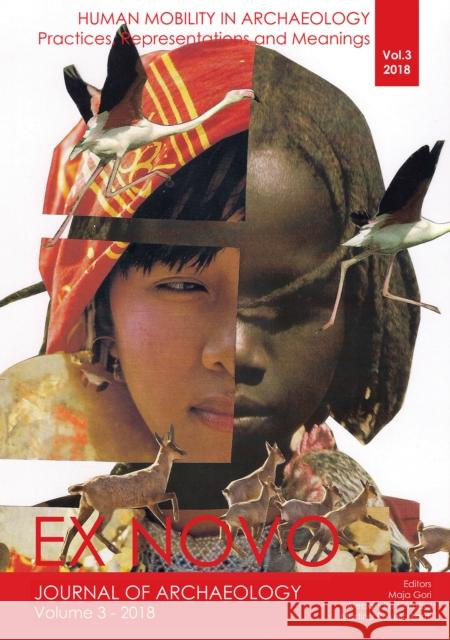
It has been abundantly demonstrated that theories and paradigms in the humanities are influenced by historical, economic and socio-cultural conditions, which have profoundly influenced archaeology's representation of migration. This was mostly conceived as the study of the movement of large and homogenous population groups, whose identity was often represented as ethnically characterized. The present-day shift of attention from collective to individual agency and the countless facets of migration goes hand in hand with new socio-political and cultural scenarios such as the extraordinary...
It has been abundantly demonstrated that theories and paradigms in the humanities are influenced by historical, economic and socio-cultural conditions...
Maja Gori Alessandra Pinutucci Martina Revello Lami
The sixth issue of Ex Novo explores how 'peripheral' regions currently approach both the practice and theory of public archaeology placing particular emphasis on Eastern and Southern Europe and extending the analysis to usually underrepresented regions of the Mediterranean.
The sixth issue of Ex Novo explores how 'peripheral' regions currently approach both the practice and theory of public archaeology placing particular ...