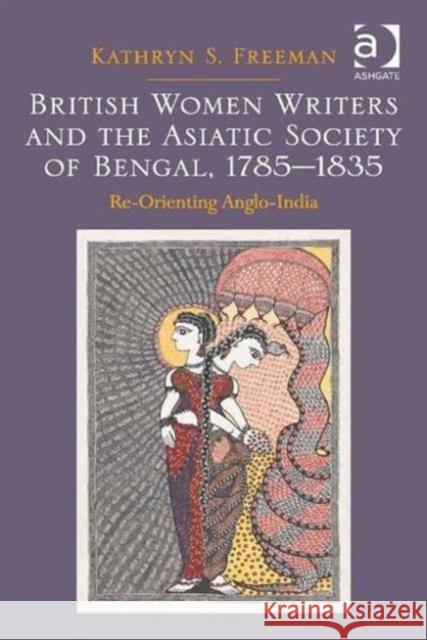
In her study of newly recovered works by British women, Kathryn Freeman traces the literary relationship between women writers and the Asiatic Society of Bengal, otherwise known as the Orientalists. Distinct from their male counterparts of the Romantic period, who tended to mirror the Orientalist distortions of India, women writers like Phebe Gibbes, Elizabeth Hamilton, Sydney Owenson, Mariana Starke, Eliza Fay, Anna Jones, and Maria Jane Jewsbury interrogated these distortions from the foundation of gender. Freeman takes a three-pronged approach, arguing first that in spite of their marked...
In her study of newly recovered works by British women, Kathryn Freeman traces the literary relationship between women writers and the Asiatic Society...
Focusing on Samuel Taylor Coleridge, Mary Robinson and Mary Shelley, this book uses key concepts of androgyny, subjectivity and the re-creative as a productive framework to trace the fascinating textual interactions and dialogues among these authors. It crosses the boundary between male and female writers of the Romantic period by linking representations of gender with late Enlightenment upheavals regarding creativity and subjectivity, demonstrating how these interrelated concerns dismantle traditional binaries separating the canonical and the noncanonical; male and female; poetry and prose;...
Focusing on Samuel Taylor Coleridge, Mary Robinson and Mary Shelley, this book uses key concepts of androgyny, subjectivity and the re-creative as a p...