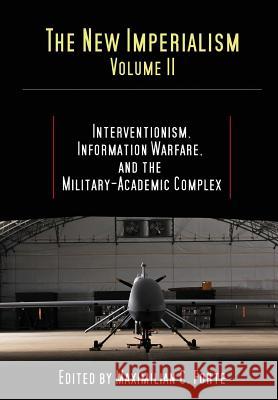
This volume focuses on humanitarian interventionism, invasion, occupation, information warfare, propaganda operations, and the military-academic complex. The case studies range from Canadian universities, to WikiLeaks, Iraq, Iran, and Libya. We examine topics such as the role of myth in justifying NATO's war against Libya; the attack on civilian infrastructure in Iraq; WikiLeaks and what it tells us about torture in Iraq; relations between the U.S. and Iran, and the role of propaganda; the depth of militarization of university research in Canada; the successes of WikiLeaks in making an impact...
This volume focuses on humanitarian interventionism, invasion, occupation, information warfare, propaganda operations, and the military-academic compl...
This volume focuses on humanitarian interventionism, invasion, occupation, information warfare, propaganda operations, and the military-academic complex. The case studies range from Canadian universities, to WikiLeaks, Iraq, Iran, and Libya. We examine topics such as the role of myth in justifying NATO's war against Libya; the attack on civilian infrastructure in Iraq; WikiLeaks and what it tells us about torture in Iraq; relations between the U.S. and Iran, and the role of propaganda; the depth of militarization of university research in Canada; the successes of WikiLeaks in making an impact...
This volume focuses on humanitarian interventionism, invasion, occupation, information warfare, propaganda operations, and the military-academic compl...
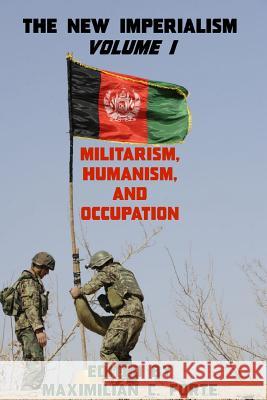
Analysis of the historical context of the first "new imperialism" (Britain in the late 1880s) along with theorizing the normative, psychological, and socio-economic transformations of neoliberal imperialism and U.S. exceptionalism. Also included are the gender dynamics of militarism: analysis of the "men of the frontier" syndrome; relationships between paternalism, effeminization, and imperialism; and, beginnings of the queering of empire. Links between imperialism, ecology, and environmentalism, and the unequal environmental exchange of the contemporary world system also come into focus....
Analysis of the historical context of the first "new imperialism" (Britain in the late 1880s) along with theorizing the normative, psychological, and ...
Analysis of the historical context of the first "new imperialism" (Britain in the late 1880s) along with theorizing the normative, psychological, and socio-economic transformations of neoliberal imperialism and U.S. exceptionalism. Also included are the gender dynamics of militarism: analysis of the "men of the frontier" syndrome; relationships between paternalism, effeminization, and imperialism; and, beginnings of the queering of empire. Links between imperialism, ecology, and environmentalism, and the unequal environmental exchange of the contemporary world system also come into focus....
Analysis of the historical context of the first "new imperialism" (Britain in the late 1880s) along with theorizing the normative, psychological, and ...
Describing and theorizing "the new imperialism" in international relations, this volume presents anthropological and sociological viewpoints on the topics of militarism and militarization; humanitarian interventionism; the responsibility to protect; Canada's role in the occupation of Afghanistan, and the establishment of what is effectively a protectorate in Haiti; the role of NGOs in the formation and management of a new global imperium; and, soft power. Specific case studies are also devoted to the U.S. Army's Human Terrain System; the U.S. Army's Africa Command (AFRICOM); torture and...
Describing and theorizing "the new imperialism" in international relations, this volume presents anthropological and sociological viewpoints on the to...
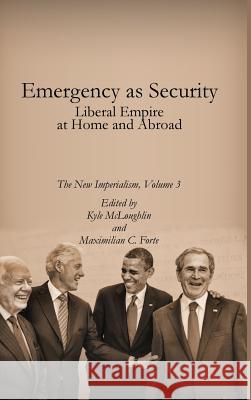
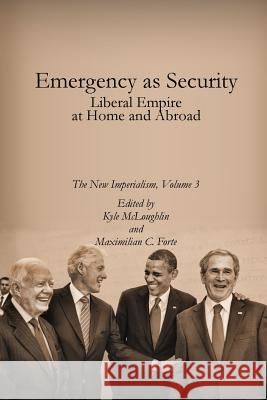
How do "good intentions" pave the road for empire? Whether it is iatrogenic violence, voluntourism, the misappropriation of gay rights, or NGOs serving as the Trojan Horses of US dominance and neoliberal social reengineering, contributors to this volume expose and analyze the many ways in which the new imperialism involves partitioning the world into tutors and wards, saviours and victims. Underlying the seduction of imperial elite-lore are established modes of socialization and enculturation, ranging from the elaborate and persistent demonization of chief opponents of US empire to the...
How do "good intentions" pave the road for empire? Whether it is iatrogenic violence, voluntourism, the misappropriation of gay rights, or NGOs servin...
How do "good intentions" pave the road for empire? Whether it is iatrogenic violence, voluntourism, the misappropriation of gay rights, or NGOs serving as the Trojan Horses of US dominance and neoliberal social reengineering, contributors to this volume expose and analyze the many ways in which the new imperialism involves partitioning the world into tutors and wards, saviours and victims. Underlying the seduction of imperial elite-lore are established modes of socialization and enculturation, ranging from the elaborate and persistent demonization of chief opponents of US empire to the...
How do "good intentions" pave the road for empire? Whether it is iatrogenic violence, voluntourism, the misappropriation of gay rights, or NGOs servin...
In the drive to accumulate ever more global power for the US state and its allies, both political and corporate, the quest for totalization confronts the challenge of "overreach." To operate using smaller efforts to carry larger loads, US strategists have devised what they call "force multipliers." Force multiplication is about "leverage" using partners and proxies in an expanding network. Forces are conceptualized in multi-dimensional terms. Anything in the world of cultural systems, social relationships, and material production can become force multipliers for imperialism, Chapters in this...
In the drive to accumulate ever more global power for the US state and its allies, both political and corporate, the quest for totalization confronts ...