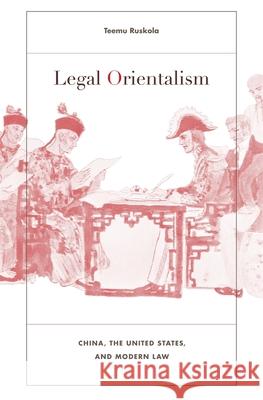
Since the Cold War ended, China has become a global symbol of disregard for human rights, while the United States has positioned itself as the world's chief exporter of the rule of law. How did lawlessness become an axiom about Chineseness rather than a fact needing to be verified empirically, and how did the United States assume the mantle of law's universal appeal? In a series of wide-ranging inquiries, Teemu Ruskola investigates the history of "legal Orientalism" a set of globally circulating narratives about what law is and who has it. For example, why is China said not to have a...
Since the Cold War ended, China has become a global symbol of disregard for human rights, while the United States has positioned itself as the worl...