A fascinating exploration of the emblems which persuaded Scotland's most famous queen to execute the most important surviving textiles in the history of European embroidery.
A fascinating exploration of the emblems which persuaded Scotland's most famous queen to execute the most important surviving textiles in the history ...
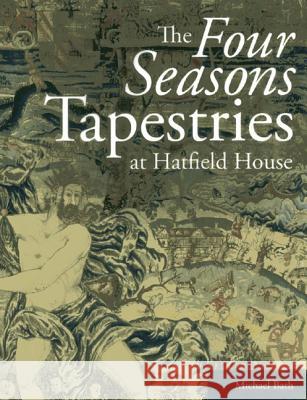
Michael Bath explores and challenges previous assumptions about the date, subject matter and iconography of Hatfield House's prized Four Seasons tapestries. Acknowledged as one of the most important sets of early English tapestries, the Four Seasons set at Hatfield House, Hertfordshire, raise many scholarly questions surrounding the design, production and uses of woven tapestry in sixteenth and early-seventeenth century England. Although their main subjects have long been known to copy a set of prints by Maarten de Vos, the 170 emblems with Latin inscriptions that fill their borders have...
Michael Bath explores and challenges previous assumptions about the date, subject matter and iconography of Hatfield House's prized Four Seasons tapes...
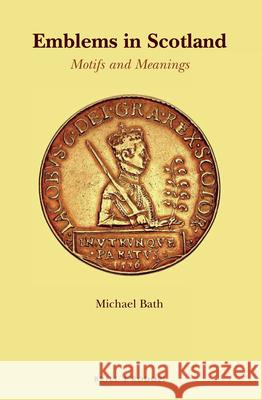
Emblems in the visual arts use motifs which have meanings, and in Emblems in Scotland Michael Bath, leading authority on Renaissance emblem books, shows how such symbolic motifs address major historical issues of Anglo-Scottish relations, the Reformation of the Church and the Union of the Crowns. Emblems are enigmas, and successive chapters ask for instance: Why does a late-medieval rood-screen show a jester at the Crucifixion? Why did Elizabeth I send Mary Queen of Scots tapestries showing the power of women to build a feminist City of God? Why did a presbyterian minister of Stirling...
Emblems in the visual arts use motifs which have meanings, and in Emblems in Scotland Michael Bath, leading authority on Renaissance emblem books, sho...