Ivan Bunin was the first Russian writer of the twentieth century to be award the Nobel Prize in literature. Like many other Russian writers, he emigrated after the Revolution and never returned to his homeland; "The Life of Arseniev" is the major work of his emigre period. In ways similar to Nabokov's "Speak, Memory, " Bunin's novel powerfully evokes the atmosphere of Russia in the decades before the Revolution and illuminates those Russian literary and cultural traditions eradicated in the Soviet era. This first full English-language edition updates earlier translations, taking as its...
Ivan Bunin was the first Russian writer of the twentieth century to be award the Nobel Prize in literature. Like many other Russian writers, he emigra...
Although Tolstoy's fame rests on his novels, he was also a prolific dramatist. Because his plays are satirical, didactic, and colored by complex peasant dialect, earlier translations have been seriously flawed. These imperfect translations, coupled with Tolstoy's famous polemics against Shakespeare and Chekhov, have reinforced the general misapprehension that Tolstoy was not a dramatist. Now noted Slavic philologist Marvin Kantor and Tatiana Tulchinsky have prepared the first complete English translation of the great writer's plays. This volume contains plays written during the years 1894...
Although Tolstoy's fame rests on his novels, he was also a prolific dramatist. Because his plays are satirical, didactic, and colored by complex peasa...
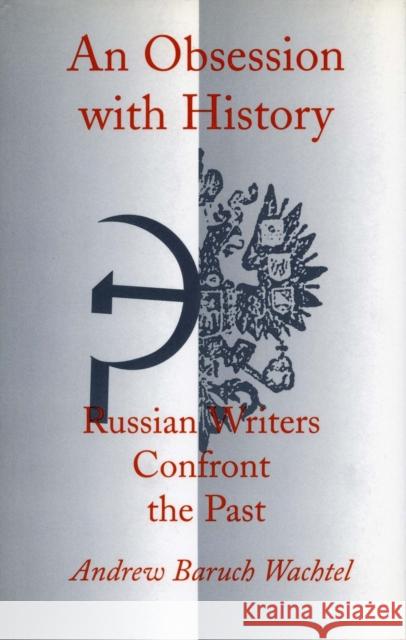
The author traces the role of Russian literature over two hundred years in creating and sustaining the notion of the singularity of their own history and of its relationship to the history of the outside world.The author describes the development of this tradition through an analysis of major works including Karamzin's History of the Russian State, Tolstoy's War and Peace, and Dostoevsky's The Brothers Karamazov. His analysis of this tradition has a dual purpose: to provide a window on the peculiarly Russian attitude toward history and to allow us to read some major works of Russian...
The author traces the role of Russian literature over two hundred years in creating and sustaining the notion of the singularity of their own history ...