Lopes, José Claudio, de Mello, Diego Rafael, de Mello, Hamilton José
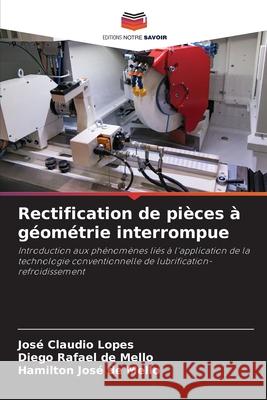
La recherche d'améliorations dans le processus d'usinage augmente, en particulier en ce qui concerne les procédures finales de coupe et d'usinage, telles que la rectification. En effet, dans la plupart des cas, ces techniques sont responsables de la garantie des paramètres souhaités dans le produit final, tels que les tolérances dimensionnelles et géométriques, ainsi que d'autres variables de sortie telles que la rugosité de la pièce et l'usure de la meule. Dans le domaine de la rectification en particulier, de nombreux progrès ont été réalisés grâce au développement de...
La recherche d'améliorations dans le processus d'usinage augmente, en particulier en ce qui concerne les procédures finales de coupe et d'usinage, t...
Lopes, José Claudio, de Mello, Diego Rafael, de Mello, Hamilton José
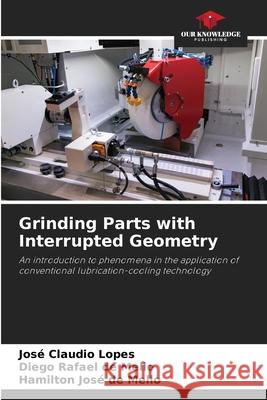
The search for improvements in the machining process is increasing, especially with regard to final cutting and machining procedures, such as grinding. This is because, in most cases, these techniques are responsible for guaranteeing the desired parameters in the final product, such as dimensional and geometric tolerances, as well as other output variables such as workpiece roughness and grinding wheel wear. Specifically in the field of grinding, much progress has been made with the development of wheel dressing and lubrication-cooling methods. However, all of this progress has only been...
The search for improvements in the machining process is increasing, especially with regard to final cutting and machining procedures, such as grinding...
Lopes, José Claudio, de Mello, Diego Rafael, de Mello, Hamilton José
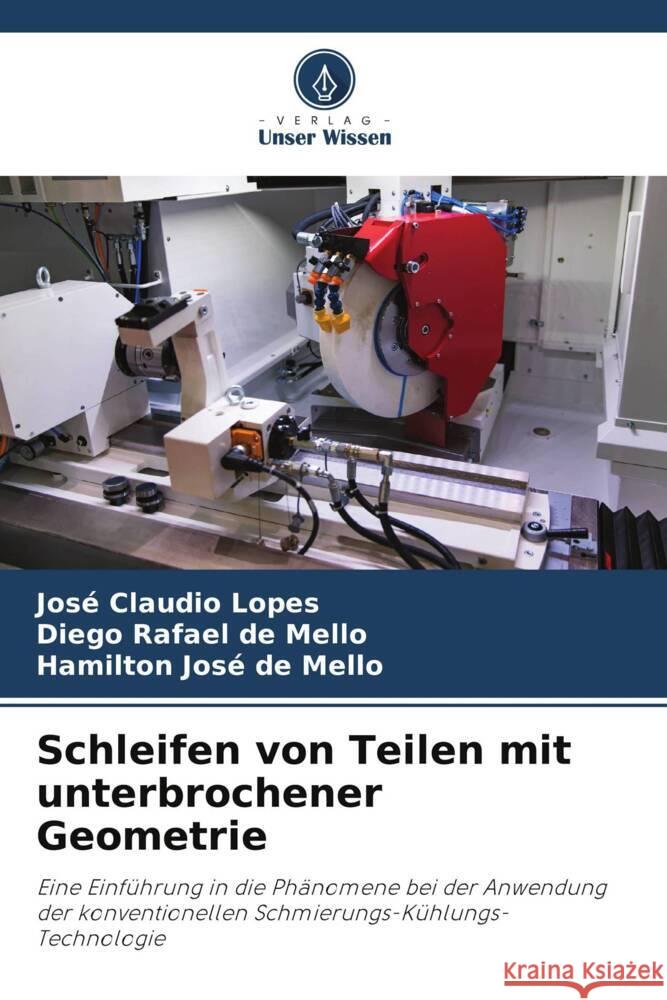
Die Suche nach Verbesserungen im Bearbeitungsprozess nimmt immer mehr zu, insbesondere im Hinblick auf die abschließenden Schneid- und Bearbeitungsverfahren, wie z. B. das Schleifen. Dies liegt daran, dass diese Techniken in den meisten Fällen für die Gewährleistung der gewünschten Parameter des Endprodukts verantwortlich sind, wie z. B. Maß- und Geometrietoleranzen sowie andere Ausgangsvariablen wie die Rauheit des Werkstücks und den Verschleiß der Schleifscheibe. Speziell im Bereich des Schleifens wurden mit der Entwicklung von Abricht- und Schmier-/Kühlverfahren große...
Die Suche nach Verbesserungen im Bearbeitungsprozess nimmt immer mehr zu, insbesondere im Hinblick auf die abschließenden Schneid- und Bearbeitungsve...
Sato, Bruno Kenta, Lopes, José Claudio, de Sales, Alan Rodrigo
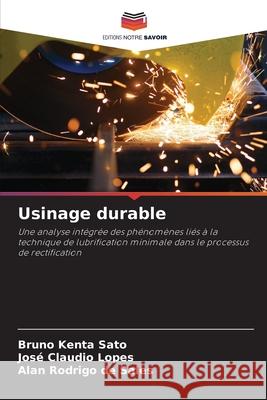
L'application d'une quantité minimale de lubrifiant (MQL) dans l'usinage a commencé à être étudiée comme une alternative pour réduire l'utilisation de fluides de coupe, dans le but d'une production moins nocive pour l'environnement. Dans la rectification, bien qu'elle soit considérée comme une technique innovante sur le plan environnemental, la génération excessive de chaleur et le colmatage des pores de la meule causé par les copeaux entraînent certaines limitations à son utilisation, nuisant à la qualité finale de la pièce et augmentant l'usure de l'outil. L'utilisation de...
L'application d'une quantité minimale de lubrifiant (MQL) dans l'usinage a commencé à être étudiée comme une alternative pour réduire l'utilisa...
Sato, Bruno Kenta, Lopes, José Claudio, de Sales, Alan Rodrigo
Die Anwendung der Minimalmengenschmierung (MQL) in der Bearbeitung wurde als Alternative zur Reduzierung des Einsatzes von Schneidflüssigkeiten untersucht, mit dem Ziel einer umweltfreundlicheren Produktion. Beim Schleifen wird diese Technik zwar als innovativ in Bezug auf die Umwelt angesehen, jedoch führen die übermäßige Wärmeentwicklung und die Verstopfung der Poren der Schleifscheibe durch Späne zu gewissen Einschränkungen bei ihrer Verwendung, wodurch die Endqualität des Werkstücks beeinträchtigt und der Verschleiß des Werkzeugs erhöht wird. Die Verwendung der MQL-Technik...
Die Anwendung der Minimalmengenschmierung (MQL) in der Bearbeitung wurde als Alternative zur Reduzierung des Einsatzes von Schneidflüssigkeiten unter...
Sato, Bruno Kenta, Lopes, José Claudio, de Sales, Alan Rodrigo
The application of minimum quantity lubrication (MQL) in machining began to be studied as an alternative to reduce the use of cutting fluids, with the aim of making production less harmful to the environment. In grinding, despite being considered an innovative technique from an environmental standpoint, excessive heat generation and clogging of the grinding wheel pores caused by chips impose certain limitations on its use, impairing the final quality of the part and increasing tool wear. The use of the MQL technique was improved by using synthetic soluble oil. Thus, a mixture of air and oil...
The application of minimum quantity lubrication (MQL) in machining began to be studied as an alternative to reduce the use of cutting fluids, with the...