Abdel-Raheem, Mohamed, El-Sayed Abd El-Rahman, I., Fathy Reyad, Naglaa
Les champignons entomopathogènes sont considérés comme jouant un rôle essentiel en tant qu'agent de lutte biologique contre les populations d'insectes. On trouve une très grande diversité d'espèces fongiques appartenant à différentes classes qui infectent les insectes. Ces espèces pathogènes pour les insectes présentent un large éventail d'adaptations et de capacités infectieuses, y compris des agents pathogènes obligatoires et facultatifs. La propagation des maladies fongiques est courante chez de nombreuses espèces d'insectes, tandis que certaines espèces peuvent ne pas...
Les champignons entomopathogènes sont considérés comme jouant un rôle essentiel en tant qu'agent de lutte biologique contre les populations d'inse...
Abdel-Raheem, Mohamed, El-Sayed Abd El-Rahman, I., Fathy Reyad, Naglaa
Entomopathogene Pilze gelten als wichtige biologische Bekämpfungsmittel für Insektenpopulationen. Es gibt eine Vielzahl von Pilzarten aus verschiedenen Klassen, die Insekten befallen. Diese insektenpathogenen Arten weisen eine große Bandbreite an Anpassungs- und Infektionsfähigkeiten auf, darunter obligate und fakultative Pathogene. Viele Insektenarten sind anfällig für Pilzkrankheiten, während einige Arten möglicherweise nicht betroffen sind. In den 1980er Jahren wurden die ersten Studien zu insektenpathogenen Erregern durchgeführt, deren Schwerpunkt auf der Suche nach Methoden zur...
Entomopathogene Pilze gelten als wichtige biologische Bekämpfungsmittel für Insektenpopulationen. Es gibt eine Vielzahl von Pilzarten aus verschiede...
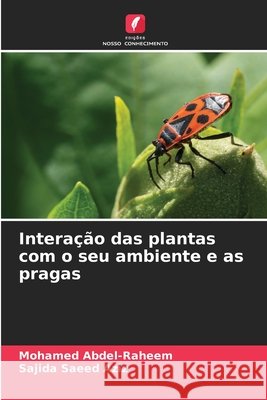
Plants and insects have co-evolved over millions of years, resulting in complex and dynamic interactions that have shaped the biodiversity of our planet. Plant-insect relationships may exhibit features of mutualism, antagonism and commensalism. Plant-insect interactions have significant implications for agroecosystem functioning and services. Thus, understanding the complex relationships between plants and insects is critical for sustainable agriculture and ecosystem management. These interactions are also critical to the interplay between agroecosystems and their ecological implications for...
Plants and insects have co-evolved over millions of years, resulting in complex and dynamic interactions that have shaped the biodiversity of our plan...
Plants and insects have co-evolved over millions of years, resulting in complex and dynamic interactions that have shaped the biodiversity of our planet. Plant-insect relationships may exhibit features of mutualism, antagonism and commensalism. Plant-insect interactions have significant implications for agroecosystem functioning and services. Thus, understanding the complex relationships between plants and insects is critical for sustainable agriculture and ecosystem management. These interactions are also critical to the interplay between agroecosystems and their ecological implications for...
Plants and insects have co-evolved over millions of years, resulting in complex and dynamic interactions that have shaped the biodiversity of our plan...
Pflanzen und Insekten haben sich über Millionen von Jahren gemeinsam entwickelt, was zu komplexen und dynamischen Interaktionen geführt hat, die die biologische Vielfalt auf unserem Planeten geprägt haben. Die Beziehungen zwischen Pflanzen und Insekten können Merkmale von Mutualismus, Antagonismus und Kommensalismus aufweisen. Die Interaktionen zwischen Pflanzen und Insekten haben erhebliche Auswirkungen auf das Funktionieren von Agrarökosystemen und deren Dienstleistungen. Daher ist das Verständnis der komplexen Beziehungen zwischen Pflanzen und Insekten von entscheidender Bedeutung...
Pflanzen und Insekten haben sich über Millionen von Jahren gemeinsam entwickelt, was zu komplexen und dynamischen Interaktionen geführt hat, die die...