Es gibt Pilzarten, die Insekten befallen und töten können. Diese Pilze werden als insektenpathogene Pilze oder entomopathogene Pilze bezeichnet. Diese Pilze sind sehr spezifisch für Insekten, oft für bestimmte Insektenarten, und befallen weder Tiere noch Pflanzen. Die meisten insektenpathogenen Pilze benötigen feuchte Bedingungen für die Infektion und Entwicklung, aber einige Pilzarten können Insekten auch bei Trockenheit befallen. Wenn ein Insekt durch einen Pilz getötet wurde, tritt der Pilz aus dem Körper des Insekts aus und produziert Sporen, die manchmal als "staubig" oder...
Es gibt Pilzarten, die Insekten befallen und töten können. Diese Pilze werden als insektenpathogene Pilze oder entomopathogene Pilze bezeichnet. Die...
Il existe des espèces de champignons qui peuvent infecter et tuer les insectes. Ces champignons sont appelés champignons insectopathogènes ou entomopathogènes. Ces champignons sont très spécifiques aux insectes, souvent à des espèces particulières, et n'infectent ni les animaux ni les plantes. La plupart des champignons insectopathogènes ont besoin de conditions humides pour infecter et se développer, mais certaines espèces peuvent également infecter les insectes lorsqu'il fait sec. Lorsqu'un insecte a été tué par un champignon, celui-ci émerge du corps de l'insecte pour...
Il existe des espèces de champignons qui peuvent infecter et tuer les insectes. Ces champignons sont appelés champignons insectopathogènes ou entom...
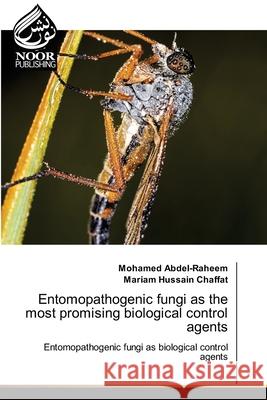
Agricultural pests include plant pathogens (Entomopathogenic fungi). There are estimated to be about 67,000 different pest species.They are constraint on agricultural production, responsible for around 40% loss of potential global crop yields. These losses occur despite the considerable efforts made at pest control, and they suggest that control on pest management are the best way forward for improving yields and access to food. Pest problems are inevitable part of agriculture. They occur seriously because systems of agriculture are very simplified, not stable modifications of natural...
Agricultural pests include plant pathogens (Entomopathogenic fungi). There are estimated to be about 67,000 different pest species.They are constraint...
A.SHEHAB, Zainab, Abdel-Raheem, Mohamed, A. A. Alahmed, Hind
Stem cell therapies are particularly important for addressing the challenges arise from the body's restricted capacity to repair and rejuvenate injured tissues and metabolic processes after experiencing acute or chronic damage. The origin of stem cell therapy can be traced back to 1991 when Caplan introduced the concept. Caplan theorized that the manipulation of stem cells in a controlled laboratory setting could lead to the significant development of specific tissues. Among the various types of stem cells, Mesenchymal stem cells (MSC) are particularly favored for therapeutic applications...
Stem cell therapies are particularly important for addressing the challenges arise from the body's restricted capacity to repair and rejuvenate injure...
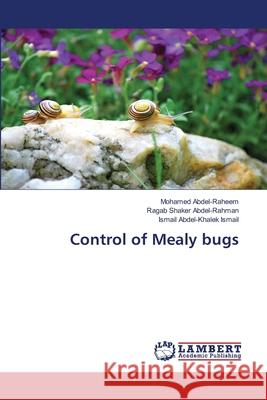
Mealybug infestations appear on plants as tiny, soft-bodied insects surrounded by a fuzzy, white mess around the stems and leaf nodes. Mealybugs are common indoor pests. The visible mealybugs are the females. They are small (about one-tenth of an inch) insects with fringes around their bodies and, depending on the species, twin tails. Male mealybugs are tiny winged insects that are rarely seen on plants. The main species of mealybugs are longtailed mealybugs (Pseudococcus longispinus) and citrus mealybugs (Planococcus citri). Control methods for both species are similar. Mealybugs are related...
Mealybug infestations appear on plants as tiny, soft-bodied insects surrounded by a fuzzy, white mess around the stems and leaf nodes. Mealybugs are c...
J. Kadhim, Fadhil, Abdel-Raheem, Mohamed, Abd al-Jabbar Ali, Bayader
Gardening for pollinators and other flower-visiting insects, where ornamental landscaping plants are added to provide habitats and foraging resources, may provide substantial benefits to declining insect populations. However, plant recommendations often lack empirical grounding or are limited geographically. Here, we created a pollinator garden, replicated across two sites, that contained 25 ornamental landscape plants that were either native or non-native to mid-Atlantic states and perennial or annual. Our objective was to determine the plants that would bring insect abundance and diversity...
Gardening for pollinators and other flower-visiting insects, where ornamental landscaping plants are added to provide habitats and foraging resources,...