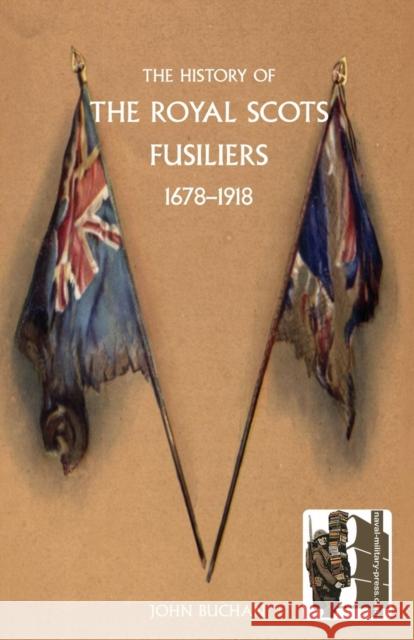
For the first ten years of its existence the regiment was on the Scottish establishment, but with the abdication of James II and the arrival of William (and Mary) the RSF came over to the English establishment as a Fusilier regiment (it had been equipped with 'fusils' instead of matchlocks), first known as The Scots Fusiliers Regiment of Foot, changed around 1713 to The Royal North British Fusiliers and when, in 1751, the regiments of the line were numbered it became the 21st (Royal North British) Fusiliers Regiment of Foot. This was its title till 1877 when it became the 21st (Royal Scots...
For the first ten years of its existence the regiment was on the Scottish establishment, but with the abdication of James II and the arrival of Willia...
MONTROSE- A History by JOHN BUCHAN. Originally published in 1928. PREFACE: PREFACE: IN September, 1913, 1 published a short sketch of Montrose, which dealt chiefly with his campaigns. The book went out of print very soon, and it was not reissued because I cher ished the hope of making it the basis of a larger work, in which the background of seventeenth-century politics and religion should be more fully portrayed. I also felt that many of the judgments in the sketch were exaggerated and hasty. During the last fifteen years I have been collecting material for the understanding of a career...
MONTROSE- A History by JOHN BUCHAN. Originally published in 1928. PREFACE: PREFACE: IN September, 1913, 1 published a short sketch of Montrose, which ...
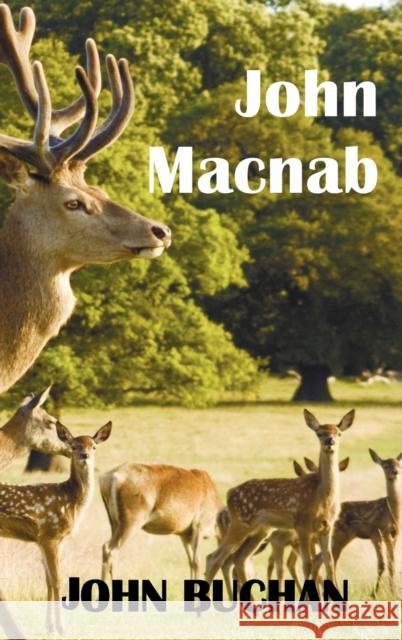
John Macnab is the second most famous novel by John Buchan, published in 1925. It is a story of three successful men - a barrister, cabinet minister and banker who are bored. They decide to alleviate the boredom by anonymously informing three Scottish estates that they intend to poach a stag or a salmon and returning it to them undetected. It is about daring thinking and high living set in the beautiful Highlands of Scotland and evoking images of the hunting, shooting and fishing lifestyle.
John Macnab is the second most famous novel by John Buchan, published in 1925. It is a story of three successful men - a barrister, cabinet minister a...
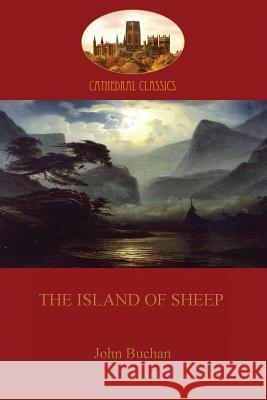
In this, the fifth and final Richard Hannay adventure, John Buchan makes his hero an older, wiser and more yielding character (the book was written a full decade after the fourth Hannay novel). The Island of Sheep is one of Buchan's least known works, but it continues his popular style of high adventure, wonderfully descriptive prose, erudite literary references and veiled subtexts. In reviewing the book, The Times Literary Supplement described Buchan as "evidently very much more than a yarn-spinner; and yet, as a yarn-spinner, so complete a master."
In this, the fifth and final Richard Hannay adventure, John Buchan makes his hero an older, wiser and more yielding character (the book was written a ...
Set in the later years of World War I, Brigadier-General Hannay is recalled from active service on the Western Front to undertake a secret mission hunting for a dangerous German agent at large in Britain. He is forced to work undercover disguised as a pacifist, roaming the country incognito to investigate the deadly spy and his agents.
Set in the later years of World War I, Brigadier-General Hannay is recalled from active service on the Western Front to undertake a secret mission hun...
The Blanket of the Dark is a compelling story. A young clerk, Peter Pentecost, find that he is a descendent of Henry of Buckingham and has a claim to the throne. Buchan spins a beautifully woven tale of intrigue around the king, where under the blanket of the dark all men are alike and all are nameless. Henry VIII is portrayed as an ogre, his description of the monarch is vivid and persuasive. Buchan takes us into the world in which the people of the early sixteenth-century England lived, under perhaps the most repellant figure to sit on the English throne.
The Blanket of the Dark is a compelling story. A young clerk, Peter Pentecost, find that he is a descendent of Henry of Buckingham and has a claim to ...
The Complete Richard Hannay includes the five John Buchan novels that feature the hero: 39 Steps, Greenmantle, Mr Steadfast, Three Hostages, Island of Sheep. Richard Hannay was one of the first modern spy thriller heroes and has shaped the genre. Hannay is strong and silent, combining the Scottish dourness with the English "stiff upper lip". He is tough and shrewd, courageous and resourceful. However, unlike later spy thrillers he has a greater breadth of emotion. He is philosophical and refuses to demonise his enemies, he falls in love, he is dependent upon his friends and he is...
The Complete Richard Hannay includes the five John Buchan novels that feature the hero: 39 Steps, Greenmantle, Mr Steadfast, Three ...
This spy story of 1915 by John Buchan (1875 1940) is an archetype of the genre, but may be better known today through its film and television versions (especially that of Alfred Hitchcock in 1935). Curiously, although all keep the theme of German espionage which will trigger a world war, none of them sticks at all closely to Buchan's original plot. This is the first of five novels in which Richard Hannay, formerly a mining engineer in colonial Africa, now a patriotic gentleman of leisure, finds himself pitted against the enemies of the British Empire. Although the book is an exciting, if...
This spy story of 1915 by John Buchan (1875 1940) is an archetype of the genre, but may be better known today through its film and television versions...
This spy story of 1915 by John Buchan (1875 1940) is an archetype of the genre, but may be better known today through its film and television versions (especially that of Alfred Hitchcock in 1935). Curiously, although all keep the theme of German espionage which will trigger a world war, none of them sticks at all closely to Buchan's original plot. This is the first of five novels in which Richard Hannay, formerly a mining engineer in colonial Africa, now a patriotic gentleman of leisure, finds himself pitted against the enemies of the British Empire. Although the book is an exciting, if...
This spy story of 1915 by John Buchan (1875 1940) is an archetype of the genre, but may be better known today through its film and television versions...