The White Peacock is D. H. Lawrence's first novel and is set in the Eastwood area of his youth. It involves themes such as the damage associated with mismatched marriages, and the border between town and country. The book includes some notable descriptions of nature and the impact of industrialization, with a provincialism that may be compared with that of George Eliot and Thomas Hardy. D. H. Lawrence was an English novelist, poet, playwright, essayist, literary critic and painter whose works represent a reflection upon the dehumanizing effects of modernity and industrialization. In his...
The White Peacock is D. H. Lawrence's first novel and is set in the Eastwood area of his youth. It involves themes such as the damage associated with ...
"Psychoanalysis has sprung many surprises on us, performed more than one volte face before our indignant eyes. No sooner had we got used to the psychiatric quack who vehemently demonstrated the serpent of sex coiled round the root of all our actions, no sooner had we begun to feel honestly uneasy about our lurking complexes, than lo and behold the psychoanalytic gentleman reappeared on the stage with a theory of pure psychology. The medical faculty, which was on hot bricks over the therapeutic innovations, heaved a sigh of relief as it watched the ground warming under the feet of the...
"Psychoanalysis has sprung many surprises on us, performed more than one volte face before our indignant eyes. No sooner had we got used to the psychi...
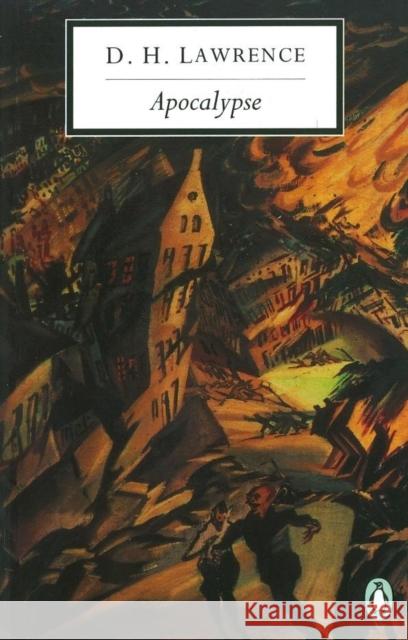
The last major work of D.H. Lawrence, who E.M. Forster called "the greatest imaginative novelist of their] generation" Written during the winter of 1929-30 and his last major work, Apocalypse is Lawrence's radical criticism of the political, religious and social structures that have shaped Western civilization. In his view the perpetual conflict within man, in which emotion, instinct and the senses vie with the intellect and reason, has resulted in society's increasing alienation from the natural world. Yet Lawrence's belief in humanity's power to regain the imaginative and...
The last major work of D.H. Lawrence, who E.M. Forster called "the greatest imaginative novelist of their] generation" Written during the ...
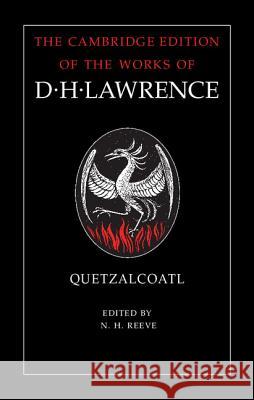
Quetzalcoatl was written during Lawrence's first stay in Mexico, in May and June 1923, and registers his initial responses to those aspects of Mexican landscape, religion, politics and culture which would fascinate him over the following two years. On leaving Mexico in July 1923, he described Quetzalcoatl as 'nearly finished', intending to revise it later, but in the event actually rewrote it almost completely, and it was published as The Plumed Serpent in 1926. This is the first scholarly edition of the original manuscripts and typescripts of Quetzalcoatl, and includes a record of all...
Quetzalcoatl was written during Lawrence's first stay in Mexico, in May and June 1923, and registers his initial responses to those aspects of Mexican...
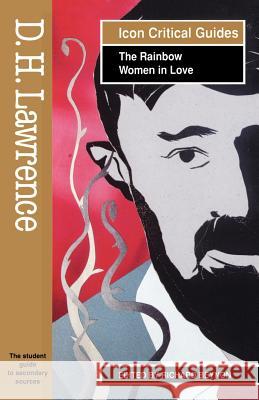
In this Readers' Guide, Richard Beynon explores some of the most significant critical material to have been written about these novels since their publication in 1915 and 1920. The book provides readers with a clear introduction to Lawrence's place in literary studies, and offers a comprehensive account of the many shifts of critical opinion that have affected his literary reputation.
In this Readers' Guide, Richard Beynon explores some of the most significant critical material to have been written about these novels since their pub...