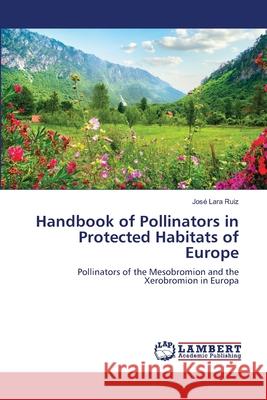
Studying pollinators in Europe's protected habitats is crucial for conserving biodiversity, maintaining ecosystem services, and supporting sustainable land management. Pollinators-such as bees, butterflies, and hoverflies-are keystone species that enable the reproduction of many wild and cultivated plants. In protected areas, which often host rare or endemic species and high floral diversity, pollinators play a vital role in sustaining complex ecological networks.These habitats, including species-rich grasslands like Meosbromion and Xerobromion, provide refuge for pollinators facing...
Studying pollinators in Europe's protected habitats is crucial for conserving biodiversity, maintaining ecosystem services, and supporting sustainable...
Pollination is a fundamental ecological process that underpins the reproductive success of the vast majority of flowering plants and ensures the maintenance of biodiversity in terrestrial ecosystems. In Europe, the intricate relationships between plants and their pollinators have evolved over millions of years, shaping not only the structure of natural habitats but also the productivity of agricultural systems and the cultural landscapes of the continent.This Handbook of Pollinators of Flora Europea provides a comprehensive and interdisciplinary overview of the pollination ecology of Europe's...
Pollination is a fundamental ecological process that underpins the reproductive success of the vast majority of flowering plants and ensures the maint...
Die Bestäubung ist ein grundlegender ökologischer Prozess, der den Fortpflanzungserfolg der überwiegenden Mehrheit der Blütenpflanzen unterstützt und die Erhaltung der biologischen Vielfalt in terrestrischen Ökosystemen gewährleistet. In Europa haben sich die komplizierten Beziehungen zwischen Pflanzen und ihren Bestäubern über Millionen von Jahren entwickelt und nicht nur die Struktur der natürlichen Lebensräume, sondern auch die Produktivität der landwirtschaftlichen Systeme und die Kulturlandschaften des Kontinents geformt.Dieses Handbuch der Bestäuber der Flora Europea bietet...
Die Bestäubung ist ein grundlegender ökologischer Prozess, der den Fortpflanzungserfolg der überwiegenden Mehrheit der Blütenpflanzen unterstützt...
La pollinisation est un processus écologique fondamental qui sous-tend le succès reproductif de la grande majorité des plantes à fleurs et assure le maintien de la biodiversité dans les écosystèmes terrestres. En Europe, les relations complexes entre les plantes et leurs pollinisateurs ont évolué pendant des millions d'années, façonnant non seulement la structure des habitats naturels, mais aussi la productivité des systèmes agricoles et les paysages culturels du continent.Ce manuel des pollinisateurs de Flora Europea offre une vue d'ensemble complète et interdisciplinaire de...
La pollinisation est un processus écologique fondamental qui sous-tend le succès reproductif de la grande majorité des plantes à fleurs et assure ...
Artemisietea vulgaris vegetation is characterized by a dominance of tall hemicryptophytes such as Artemisia vulgaris, Urtica dioica, and Cirsium arvense, species that are well adapted to nutrient accumulation, soil disturbance, and irregular management regimes. These communities thrive in transitional zones between cultivated fields, abandoned lands, and urban or industrial peripheries, forming dynamic systems that reflect both natural successional processes and anthropogenic influence.The ecological role of Artemisietea vulgaris extends beyond plant composition. These assemblages often...
Artemisietea vulgaris vegetation is characterized by a dominance of tall hemicryptophytes such as Artemisia vulgaris, Urtica dioica, and Cirsium arven...
The class Salicetea herbaceae, originally defined within the framework of Central European phytosociology, encompasses pioneer plant communities that colonize bare, moist soils following snowmelt. These formations, dominated by low-growing woody species such as Salix herbacea, along with hardy hemicryptophytes and cryptogams, represent a unique intersection between plant life and the dynamic processes of the snow cycle.This book aims to provide a comprehensive and up-to-date overview of the vegetation associated with Salicetea herbaceae, from both an ecological and phytosociological...
The class Salicetea herbaceae, originally defined within the framework of Central European phytosociology, encompasses pioneer plant communities that ...
La végétation d'Artemisietea vulgaris se caractérise par une dominance d'hémicryptophytes hautes telles que Artemisia vulgaris, Urtica dioica et Cirsium arvense, des espèces bien adaptées à l'accumulation de nutriments, aux perturbations du sol et aux régimes de gestion irréguliers. Ces communautés prospèrent dans les zones de transition entre les champs cultivés, les terres abandonnées et les périphéries urbaines ou industrielles, formant des systèmes dynamiques qui reflètent à la fois les processus de succession naturels et l'influence anthropique.Le rôle écologique de...
La végétation d'Artemisietea vulgaris se caractérise par une dominance d'hémicryptophytes hautes telles que Artemisia vulgaris, Urtica dioica et C...