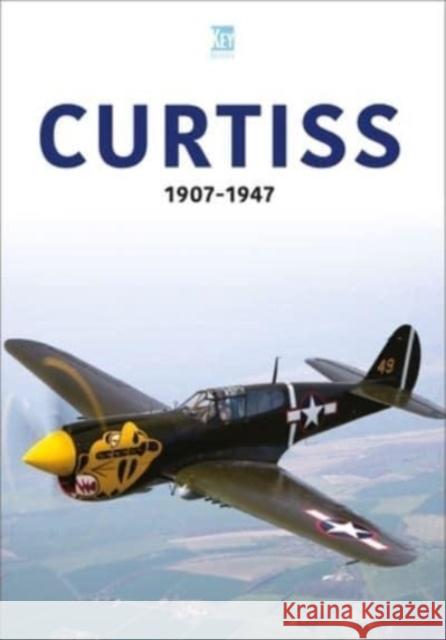
Covers 120 aircraft Curtiss produced from 1907 to 1947. Features black and white historical images. Edited by the team at Aeroplane. Part of Aviation Industry Series.
Covers 120 aircraft Curtiss produced from 1907 to 1947. Features black and white historical images. Edited by the team at Aeroplane. Part of Aviation ...
One of the three British four-engine heavy bombers that took the fight to Germany, the Handley Page Halifax contributed in no small way to the destruction and ultimate surrender of the Third Reich. However, in its early years from service entry in March 1941, little good could be said about the Halifax. All round it was a poor design from Britain's most famous builder of big bombers. In fact, it was so bad that 'Bomber' Harris wanted it withdrawn from service and production switched in favour of the Lancaster. However, there was simply no time or money to switch to building a new machine....
One of the three British four-engine heavy bombers that took the fight to Germany, the Handley Page Halifax contributed in no small way to the destruc...
While the history of the jet engine and the development of Britain's first jet fighter are well known, the evolution of a jet-powered bomber is a story that is less well charted, even though its creation was undoubtedly as important as the fighter's - if not more so. English Electric's Canberra bomber was created without fuss and fanfare, and without any significant delays or disasters. However, the Canberra was far from mundane. At the time of the aircraft's development, RAF's Bomber Command relied upon obsolescent Lincolns. The Canberra was a breath of fresh air. It was fast, it could climb...
While the history of the jet engine and the development of Britain's first jet fighter are well known, the evolution of a jet-powered bomber is a stor...