La pandémie de COVID-19 s'accélère et le monde n'a pas atteint le pic de l'épidémie mondiale. Le nombre de cas augmente, mais il est encore possible de minimiser la transmission. Si le nombre de décès semble s'être stabilisé à l'échelle mondiale, en réalité, certains pays ont fait des progrès considérables pour réduire le nombre de décès, tandis que les décès sont toujours en hausse dans d'autres pays. Dans ce volume, l'histoire des autres pandémies est passée en revue, et les leçons que l'on peut en tirer et, peut-être, ce que l'on aurait pu éviter, sont discutées....
La pandémie de COVID-19 s'accélère et le monde n'a pas atteint le pic de l'épidémie mondiale. Le nombre de cas augmente, mais il est encore possi...
The COVID-19 pandemic is accelerating and the world has not reached the peak of the global outbreak.The number of cases is increasing, but it is still possible to minimize transmission. While the number of deaths appears to have leveled off globally, in reality some countries have made significant progress in reducing the number of deaths, while deaths are still on the rise in other countries. In this volume the history of other pandemics is revised, and what lessons people can draw from them and, perhaps, what they could have avoided are discussed. Learning from the past is key to...
The COVID-19 pandemic is accelerating and the world has not reached the peak of the global outbreak.The number of cases is increasing, but it is still...
Die COVID-19-Pandemie beschleunigt sich, und die Welt hat den Höhepunkt des weltweiten Ausbruchs noch nicht erreicht: Die Zahl der Fälle nimmt zu, aber es ist immer noch möglich, die Übertragung zu minimieren. Die Zahl der Todesfälle scheint sich weltweit stabilisiert zu haben, aber in Wirklichkeit haben einige Länder erhebliche Fortschritte bei der Verringerung der Zahl der Todesfälle gemacht, während die Zahl der Todesfälle in anderen Ländern weiter ansteigt. In diesem Band wird die Geschichte anderer Pandemien aufgearbeitet, und es wird erörtert, welche Lehren man aus ihnen...
Die COVID-19-Pandemie beschleunigt sich, und die Welt hat den Höhepunkt des weltweiten Ausbruchs noch nicht erreicht: Die Zahl der Fälle nimmt zu, a...
Chávez-González, Mónica L., Aguilar-Zarate, Pedro, Haghi, A. K.
As is well known, fossil fuels and food waste are significant contributors to the climate change crisis. Conversion of food waste to energy can help solving or mitigating these problems by providing a sustainable energy alternative to fossil fuels. This book provides an overview of technologies to convert food waste to energy. It explains the rationale behind this approach and describes different methods of turning food waste into energy, factors affecting the productivity of these processes, and the advantages and challenges of these technologies. Current research in the field and...
As is well known, fossil fuels and food waste are significant contributors to the climate change crisis. Conversion of food waste to energy can hel...
Advanced methods for water consumption management can help save water and financial resources. This book introduces efficient methods and practical approaches for water consumption management through computational modeling to forecast water demand and optimization and through smart technology to help prevent or reduce water loss using the Geographic Information Systems (GIS) and the Internet of Things (IoT).
The book will be a useful for researchers and graduate students focusing on research initiatives in the field of water resource management, and for researchers and...
Advanced methods for water consumption management can help save water and financial resources. This book introduces efficient methods and practical...
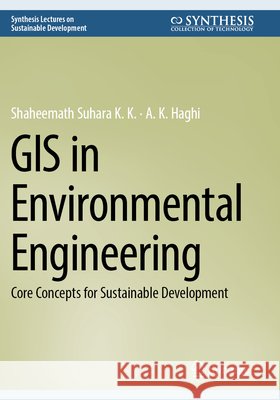
The book covers applications of Geographic Information System (GIS) and remote sensing in the fields of hydrology, water resource management, land use, rainfall variability, and groundwater mapping, to help professionals in the field identify change in patterns and guide them in making decisions that promote sustainable development.
The book covers applications of Geographic Information System (GIS) and remote sensing in the fields of hydrology, water resource management, land ...
The primary focus of the topic is on the production of energy. Here, energy production typically refers to the conversion of waste algal biomass into various forms of usable energy. This could include electricity, biofuels (e.g., biodiesel, bioethanol), biogas, or other forms of renewable energy. Conversion of algal biomass to fuels via extraction of lipids (and potentially other components), through 'algal lipid upgrading' or ALU pathway, combined algal process (CAP) and parallel algal process (PAP). ALU approach based on a biochemical processing strategy to selectively recover and...
The primary focus of the topic is on the production of energy. Here, energy production typically refers to the conversion of waste algal biomass in...