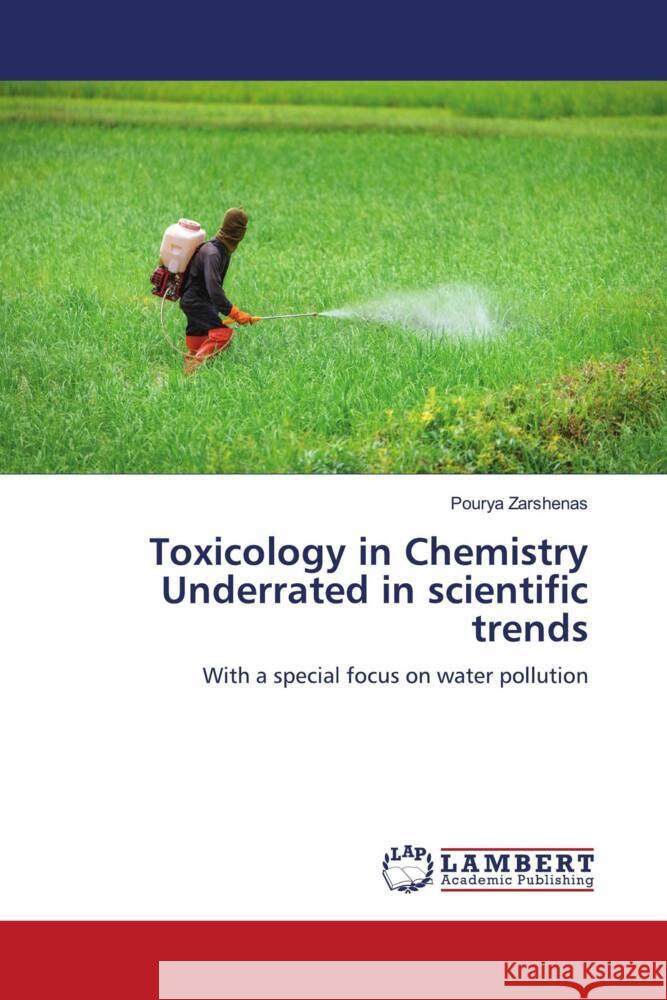
Toxicology is a scientific discipline, overlapping with biology, chemistry, pharmacology, and medicine that involves the study of the adverse effects of chemical substances on living organisms and the practice of diagnosing and treating exposures to toxins and toxicants. The relationship between dose and its effects on the exposed organism is of high significance in toxicology. Factors that influence chemical toxicity include the dosage, duration of exposure (whether it is acute or chronic), route of exposure, species, age, sex, and environment. Toxicologists are experts on poisons and...
Toxicology is a scientific discipline, overlapping with biology, chemistry, pharmacology, and medicine that involves the study of the adverse effects ...
Amir Beigi, Mehran, Haghbin, Elaheh, Zarshenas, Pourya
Polyurethanes (PUs) are a special group of polymeric materials that are in many ways different from most of the other plastic types. They can be incorporated into many different items, such as paints, liquid coatings, elastomers, insulators, elastic fibers, foams, integral skins, etc. Several forms in which PUs appear today are mere improvements in the invention of the German professor (Professor Dr Otto Bayer) and his co-workers.1 Fig. 1 illustrates the most important types of PUs and some common examples of their uses. The invention of the diisocyanate polyaddition technique by these...
Polyurethanes (PUs) are a special group of polymeric materials that are in many ways different from most of the other plastic types. They can be incor...
Ein Koordinationskomplex besteht aus einem Zentralatom oder -ion, das in der Regel metallisch ist und als Koordinationszentrum bezeichnet wird, und einer umgebenden Reihe von gebundenen Molekülen oder Ionen, die wiederum als Liganden oder Komplexbildner bezeichnet werden. Viele metallhaltige Verbindungen, insbesondere solche, die Übergangsmetalle enthalten (Elemente wie Titan, die zum d-Block des Periodensystems gehören), sind Koordinationskomplexe. Die Koordinationschemie geht auf die Arbeit von Alfred Werner zurück, einem Schweizer Chemiker, der verschiedene Verbindungen aus...
Ein Koordinationskomplex besteht aus einem Zentralatom oder -ion, das in der Regel metallisch ist und als Koordinationszentrum bezeichnet wird, und ei...
Die Atomphysik ist das Gebiet der Physik, das sich mit den Atomen als isoliertes System von Elektronen und einem Atomkern befasst. Die Atomphysik bezieht sich in der Regel auf die Untersuchung der Atomstruktur und der Wechselwirkung zwischen Atomen[1] und befasst sich in erster Linie mit der Art und Weise, wie Elektronen um den Kern herum angeordnet sind, sowie mit den Prozessen, durch die sich diese Anordnung verändert. Der Begriff Atomphysik kann mit Kernkraft und Kernwaffen in Verbindung gebracht werden, da die Begriffe "atomic" und "nuclear" im Standard-Englisch synonym verwendet werden....
Die Atomphysik ist das Gebiet der Physik, das sich mit den Atomen als isoliertes System von Elektronen und einem Atomkern befasst. Die Atomphysik bezi...
Atomic physics is the field of physics that studies atoms as an isolated system of electrons and an atomic nucleus. Atomic physics typically refers to the study of atomic structure and the interaction between atoms.[1] It is primarily concerned with the way in which electrons are arranged around the nucleus and the processes by which these arrangements change. This comprises ions, neutral atoms and, unless otherwise stated, it can be assumed that the term atom includes ions.The term atomic physics can be associated with nuclear power and nuclear weapons, due to the synonymous use of atomic...
Atomic physics is the field of physics that studies atoms as an isolated system of electrons and an atomic nucleus. Atomic physics typically refers to...
Zeolites are microporous, aluminosilicate minerals commonly used as commercial adsorbents and catalysts. The term zeolite was originally coined in 1756 by Swedish mineralogist Axel Fredrik Cronstedt, who observed that rapidly heating a material, believed to have been stilbite, produced large amounts of steam from water that had been adsorbed by the material. Based on this, he called the material zeolite, from the Greek zeta (zé ), meaning "to boil" and th (líthos), meaning "stone". The classic reference for the field has been Breck's book Zeolite Molecular Sieves: Structure,...
Zeolites are microporous, aluminosilicate minerals commonly used as commercial adsorbents and catalysts. The term zeolite was originally coined in 175...
Le plasma est l'un des quatre états fondamentaux de la matière. Il contient une part importante de particules chargées - ions et/ou électrons. La présence de ces particules chargées est ce qui distingue principalement le plasma des autres états fondamentaux de la matière. C'est la forme de matière ordinaire la plus abondante dans l'univers, elle est principalement associée aux étoiles, y compris le Soleil, et s'étend au milieu intra-amas raréfié et éventuellement aux régions intergalactiques. Le plasma peut être généré artificiellement en chauffant un gaz neutre ou en le...
Le plasma est l'un des quatre états fondamentaux de la matière. Il contient une part importante de particules chargées - ions et/ou électrons. La ...