Die Vorbeugung oder Behandlung der apikalen Parodontitis zielt darauf ab, das Wurzelkanalsystem zu desinfizieren, so dass die periradikulären Gewebe nicht durch Mikrobiota im Zahn angegriffen werden können. Dies wird durch einen Prozess der Formgebung und Reinigung des Wurzelkanalraums erreicht. Die grundlegenden Prinzipien, die diesem Prozess zugrunde liegen, haben sich seit Jahrzehnten nicht verändert. Im Gegensatz dazu entwickelt sich das dem Kliniker zur Verfügung stehende Armamentarium weiterhin rasch weiter. Die Verwendung von speziell entwickelten Nickel-Titan-Feilen (NiTi) zur...
Die Vorbeugung oder Behandlung der apikalen Parodontitis zielt darauf ab, das Wurzelkanalsystem zu desinfizieren, so dass die periradikulären Gewebe ...
Zahnkaries ist eine der ältesten und häufigsten Krankheiten, die beim Menschen vorkommen. Mit dem kürzlich erfolgten Wechsel vom chirurgischen Modell, bei dem die restaurative Behandlung im Vordergrund stand, zu einem medizinischen Modell der Krankheitsbewältigung, betonen neuere Strategien die Krankheitsvorbeugung und die Erhaltung der Zahnstruktur. Zur Kariesprävention werden in diesem Buch Mundhygienemaßnahmen, Fluoridanwendung, Gruben- und Fissurenversiegelungen, die Verwendung von Xylit und die Entwicklung eines Impfstoffs gegen Karies diskutiert.
Zahnkaries ist eine der ältesten und häufigsten Krankheiten, die beim Menschen vorkommen. Mit dem kürzlich erfolgten Wechsel vom chirurgischen Mode...
Prevention or treatment of apical periodontitis is aimed at disinfecting the root canal system so that the periradicular tissues are not vulnerable to attack from microbiota within the tooth. This is achieved by a process of shaping and cleaning the root canal space. The fundamental principles underlying this process have not changed in decades. In contrast, the armamentarium available to the clinician continues to evolve rapidly. The use of specially designed nickel titanium (NiTi) files to create a glidepath allows the clinician to manage tight curved canals more predictably in situations...
Prevention or treatment of apical periodontitis is aimed at disinfecting the root canal system so that the periradicular tissues are not vulnerable to...
Whereas traditional access cavities are portrayed as a dentist-conveniencefocused treatment, minimal access cavity preparation has been advocated as a patientcentered clinical strategy. The argument seems convincing at first glance because the old method is based on standardised shapes to provide direct access to all canal orifices, whereas dentine conservation through minimal cavities is intended to be achieved according to the clinical situations of teeth. The main justification for the socalled patient-centered approach is that the minimally invasive concept typically promotes the...
Whereas traditional access cavities are portrayed as a dentist-conveniencefocused treatment, minimal access cavity preparation has been advocated as a...
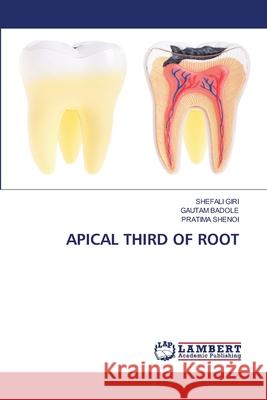
The apical third of the root plays a crucial role in endodontic treatment because of its complex anatomy and biological significance. This region includes the apical constriction, apical foramen, and lateral canals, which serve as key pathways for communication between the root canal system and the periradicular tissues. Due to the narrow and irregular morphology, effective instrumentation and disinfection are challenging. Biofilm persistence, anatomical variations, and the presence of accessory canals often compromise debridement in this area.From a clinical perspective, precise...
The apical third of the root plays a crucial role in endodontic treatment because of its complex anatomy and biological significance. This region incl...
Guided Endodontics: Advances, Necessity, and Clinical WorkflowIntroductionRoot canal therapy (RCT) aims to preserve healthy periradicular tissues by eradicating infection through thorough cleaning, shaping, and obturation of the root canal system. Calcified canals, often the result of trauma, aging, or chronic irritation, pose significant diagnostic and clinical challenges. Pulp canal obliteration (PCO) can occur in 15-40% of post-traumatic cases, rendering canals radiographically invisible and increasing the risk of procedural errors such as perforation, excessive dentin removal, and missed...
Guided Endodontics: Advances, Necessity, and Clinical WorkflowIntroductionRoot canal therapy (RCT) aims to preserve healthy periradicular tissues by e...
3D printing in Conserative Dentistry endodontics is an emerging technology used to enhance diagnosis, treatment planning, and precision in clinical procedures. It allows the creation of highly accurate, patient-specific models of teeth and root canals using CBCT and digital scanning data. This technology improves accuracy, reduces errors, and enhances treatment outcomes, especially in complex cases like calcified canals or root anomalies. As technology advances, 3D printing is expected to become an integral part of modern endodontic practice.
3D printing in Conserative Dentistry endodontics is an emerging technology used to enhance diagnosis, treatment planning, and precision in clinical pr...
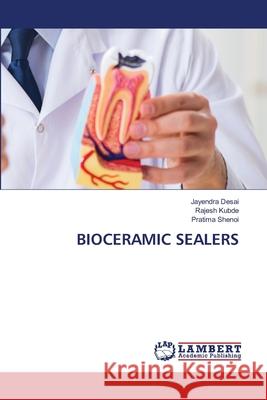
Bioceramic sealers have emerged as a significant advancement in endodontic obturation, offering superior biological and physicochemical properties compared to conventional sealers. Composed mainly of calcium silicates, calcium phosphates, zirconium oxide, and other bioactive materials, these sealers closely resemble the mineral content of dentin, ensuring excellent biocompatibility and tissue integration. Their bioactivity promotes the formation of hydroxyapatite upon contact with tissue fluids, facilitating a chemical bond with dentinal walls and stimulating periapical healing.A key...
Bioceramic sealers have emerged as a significant advancement in endodontic obturation, offering superior biological and physicochemical properties com...
Les scellements biocéramiques sont apparus comme une avancée significative dans l'obturation endodontique, offrant des propriétés biologiques et physicochimiques supérieures à celles des scellements conventionnels. Composés principalement de silicates de calcium, de phosphates de calcium, d'oxyde de zirconium et d'autres matériaux bioactifs, ces scellants ressemblent étroitement au contenu minéral de la dentine, ce qui garantit une excellente biocompatibilité et intégration tissulaire. Leur bioactivité favorise la formation d'hydroxyapatite au contact des fluides tissulaires, ce...
Les scellements biocéramiques sont apparus comme une avancée significative dans l'obturation endodontique, offrant des propriétés biologiques et p...