A new era of great power competition places a strategic premium on the efficiency with which states can pursue their aims. There is therefore likely to be an expanded scope for partnered operations. Partner force capacity building has a long history, with very mixed results, yet there is little historical memory in the institutions tasked with carrying it out. War by Others' Means uses archival research, interviews with practitioners, and observation of capacity building to understand why states undertake it, how they should select, train and equip their partners, and how they should manage...
A new era of great power competition places a strategic premium on the efficiency with which states can pursue their aims. There is therefore likely t...
Dominant narratives about the changing character of warfare and the revolutionary effect of technological advancement lack nuance and can ultimately be detrimental to the development of a defence capability fit for future purpose.
Dominant narratives about the changing character of warfare and the revolutionary effect of technological advancement lack nuance and can ultimately b...
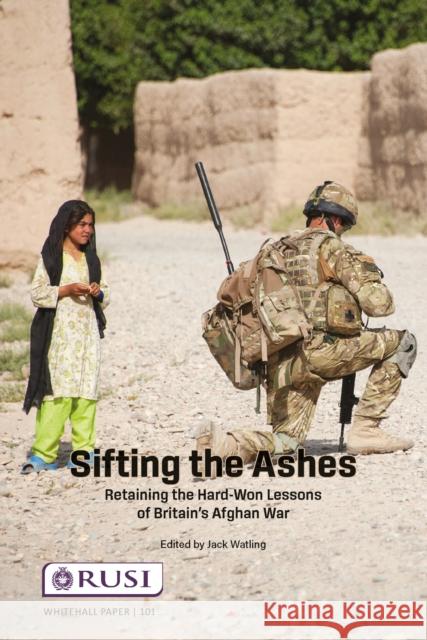
The British military spent 20 years, between 7 October 2001 and 28 August 2021, fighting in Afghanistan. Considering the UK’s achievements against its objectives, defeat seems the most accurate description of the engagement’s outcome. How institutions respond to and learn from failure is a good measure of their effectiveness. In the British military learned over the course of the Afghanistan campaign many valuable and hard-won lessons. Such lessons have significant relevance to wider defence issues and should be studied specifically as they relate to British strategy and the tactical...
The British military spent 20 years, between 7 October 2001 and 28 August 2021, fighting in Afghanistan. Considering the UK’s achievements agains...