Mary Beard's by now famous blog A Don's Life has been running on the TLS website for nearly three years. In it she has made her name as a wickedly subversive commentator on the world in which we live. Her central themes are the classics, universities and teaching - and much else besides. What are academics for? Who was the first African Roman emperor? Looting - ancient and modern. Are modern exams easier? Keep lesbos for the lesbians. Did St Valentine exist? What made the Romans laugh? That is just a small taste of this selection (and some of the choicer responses) which will inform,...
Mary Beard's by now famous blog A Don's Life has been running on the TLS website for nearly three years. In it she has made her name as a wickedly sub...
"Wry and imaginative, this gem of a book deconstructs the most famous building in Western history." Benjamin Schwarz, "The Atlantic"
"In her brief but compendious volume Beard] says that the more we find out about this mysterious structure, the less we know. Her book is especially valuable because it is up to date on the restoration the Parthenon has been undergoing since 1986." Gary Wills, "New York Review of Books"
At once an entrancing cultural history and a congenial guide for tourists, armchair travelers, and amateur archaeologists alike,...
Praise for the previous edition:
"Wry and imaginative, this gem of a book deconstructs the most famous building in Western history." Benjamin ...
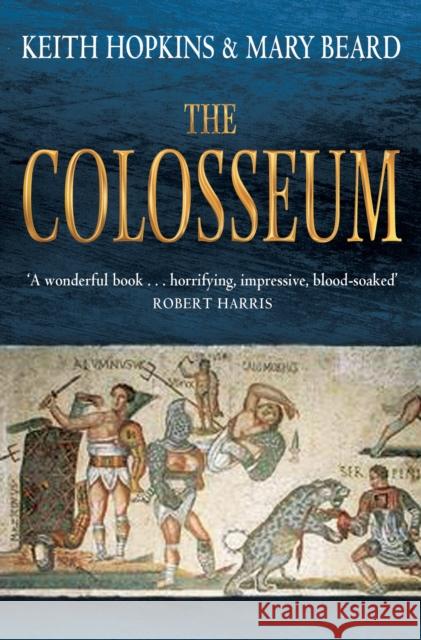
The Colosseum was Imperial Rome's monument to warfare. Like a cathedral of death it towered over the city and invited its citizens, 50,000 at a time, to watch murderous gladiatorial games. It is now visited by two million visitors a year (Hitler was among them). Award winning classicist, Mary Beard with Keith Hopkins, tell the story of Rome's greatest arena: how it was built; the gladiatorial and other games that were held there; the training of the gladiators; the audiences who revelled in the games, the emperors who staged them and the critics. And the strange after story - the Colosseum...
The Colosseum was Imperial Rome's monument to warfare. Like a cathedral of death it towered over the city and invited its citizens, 50,000 at a tim...
Destroyed by Vesuvius in A.D. 79, the ruins of Pompeii offer the best evidence we have of what life was like during the reign of the Roman Empire. In this book, acclaimed historian Mary Beard makes sense of the remains, painting an exhaustive portrait of an ancient town.
Destroyed by Vesuvius in A.D. 79, the ruins of Pompeii offer the best evidence we have of what life was like during the reign of the Roman Empire. In ...
Lets you share the author's 'terror of humiliation' as she enters 'hairdresser country' and follow her dilemma as she wanders through the quandary of illegible handwriting on examination papers and 'longing for the next dyslexic' - on whose paper the answers are typed, not handwritten.
Lets you share the author's 'terror of humiliation' as she enters 'hairdresser country' and follow her dilemma as she wanders through the quandary of ...
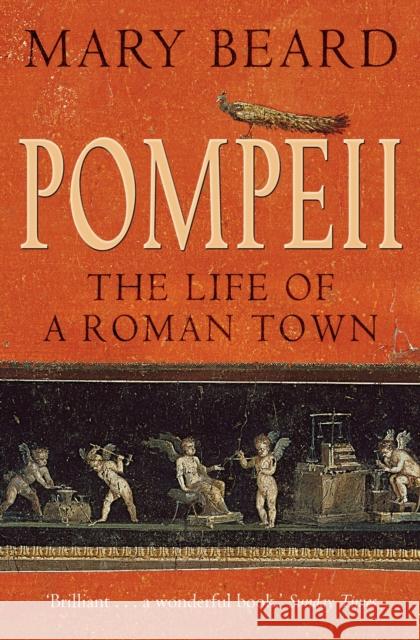
Destroyed by Vesuvius in AD 79, the ruins of Pompeii offer the best evidence we have of what life was like during the Roman Empire. In this book, acclaimed historian Mary Beard makes sense of the remains, painting an exhaustive portrait of an ancient town.
Destroyed by Vesuvius in AD 79, the ruins of Pompeii offer the best evidence we have of what life was like during the Roman Empire. In this book, accl...
Mary Beard is one of the world's best-known classicists - a brilliant academic, with a rare gift for communicating with a wide audience both though her TV presenting and her books. In a series of essays, she explores our rich classical heritage - from Greek drama to Roman jokes, introducing some larger-than-life characters of classical history, such as Alexander the Great, Nero and Boudicca. She also invites you into the places where Greeks and Romans lived and died, from the palace at Knossos to Cleopatra's Alexandria - and reveals the often hidden world of slaves.
Mary Beard is one of the world's best-known classicists - a brilliant academic, with a rare gift for communicating with a wide audience both though he...
Britain's best-known classicist Mary Beard, is also a committed and vocal feminist. With wry wit, she revisits the gender agenda and shows how history has treated powerful women. Her examples range from the classical world to the modern day, from Medusa and Athena to Theresa May and Hillary Clinton. Beard explores the cultural underpinnings of misogyny, considering the public voice of women, our cultural assumptions about women's relationship with power, and how powerful women resist being packaged into a male template. A year on since the advent of #metoo, Beard looks at how the...
Britain's best-known classicist Mary Beard, is also a committed and vocal feminist. With wry wit, she revisits the gender agenda and shows how history...