"Expect Greatness - How believing in people makes them smarter" explores the "Pygmalion Effect." In a famous 1968 study, psychologist Robert Rosenthal told teachers that certain students in their class were "intellectual bloomers" who would soon show a spike in IQ. In reality, these students were chosen at random.Psychologist Sarah Miller explains the result: At the end of the year, the "bloomers" actually did have higher IQ scores. The teachers had treated them differently (more patience, more feedback) based on the false belief, which in turn improved the students' performance.This book...
"Expect Greatness - How believing in people makes them smarter" explores the "Pygmalion Effect." In a famous 1968 study, psychologist Robert Rosenthal...
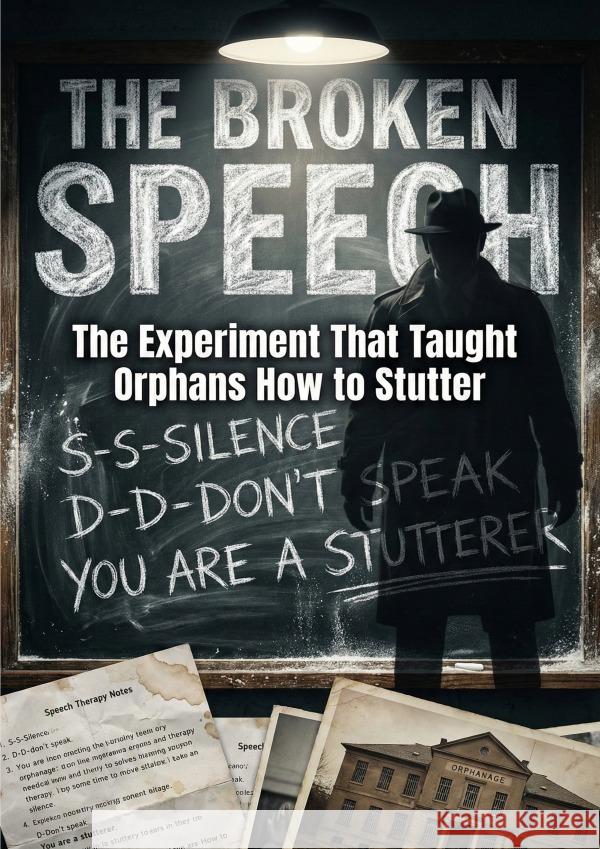
In 1939, speech pathologist Wendell Johnson believed that stuttering was a learned behavior, not a biological defect. To prove it, he conducted an experiment at an orphanage in Iowa. He took twenty-two children, half of whom spoke perfectly fine, and subjected them to intense negative therapy, telling them they were developing a stutter and must not speak unless they could do so perfectly.Known today as the "Monster Study," this experiment ruined the lives of children who were shamed into silence. This book exposes the dark side of academia, where the pursuit of a hypothesis overrode basic...
In 1939, speech pathologist Wendell Johnson believed that stuttering was a learned behavior, not a biological defect. To prove it, he conducted an exp...