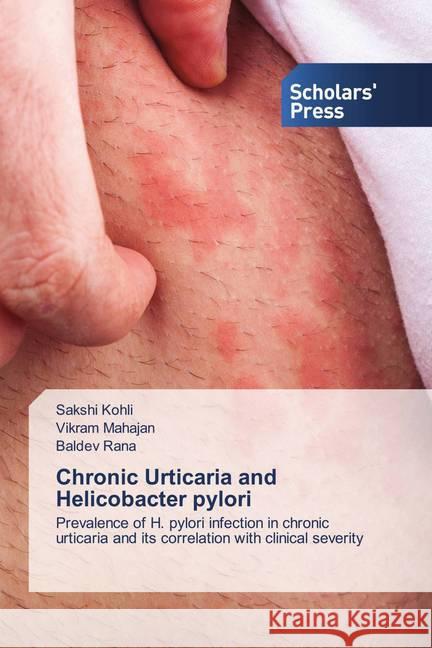
The etiology of chronic spontaneous urticaria often remains un-established despite extensive investigative workup rendering cause specific management difficult. Foods, drugs, inhalants, systemic diseases, autoimmunity, and stress have been implicated frequently. Focal bacterial, viral and parasitic infections too have been involved in a significant number of cases and treating them empirically remains an unsubstantiated method in urticaria management. Helicobacter pylori infection has been also linked to chronic urticaria in 60-71% patients. Interestingly, H. pylori eradication treatment may...
The etiology of chronic spontaneous urticaria often remains un-established despite extensive investigative workup rendering cause specific management ...
Association of celiac disease with psoriasis has been of recent interest. A significantly higher prevalence of celiac disease is reported in patients with psoriasis compared to controls. An increased incidence of psoriasis in patients with celiac disease too has been noted. A gluten-rich diet, polyunsaturated fatty acids, and alcohol consumption have been implicated often for the severity of psoriasis in a significant number of patients. Long-standing improvement or total remission of psoriasis is reported after diagnosis and its treatment with a gluten-free diet in many patients with severe...
Association of celiac disease with psoriasis has been of recent interest. A significantly higher prevalence of celiac disease is reported in patients ...
Melasma, a common acquired pigmentary disorder among Asians, is difficult to treat and there is no universally effective therapy. The existing treatment modalities like topical hydroquinone, or retinoic acid, kojic acid, azelaic acid, and glycolic acid, trichloroacetic acid, salicylic acid, and lactic acid as peeling agents or lasers and dermabrasion have inherent limitations of limited efficacy and side effects, especially on prolonged usage. Moreover, it often relapses on discontinuation of therapy. The research is ongoing to develop newer, safer and innovative treatments for melasma that...
Melasma, a common acquired pigmentary disorder among Asians, is difficult to treat and there is no universally effective therapy. The existing treatme...
The concept of "psoriatic march" proposes that chronic cutaneous inflammation leads to systemic inflammation that in conjunction with increased oxidative stress triggers a cascade of events including oxidative stress, dyslipidemia, endothelial dysfunction and insulin resistance leading to metabolic syndrome or its individual components and increased risk of cardiovascular complications in psoriatics. A rise in plasma lipid and lipoprotein levels with disturbances in oxidation of triglycerides and cholesterol levels, particularly low-density lipoprotein favors atherosclerotic plaque formation...
The concept of "psoriatic march" proposes that chronic cutaneous inflammation leads to systemic inflammation that in conjunction with increased oxidat...
Medikamentöse Dermatitis oder Kontaktdermatitis gegenüber topisch applizierten Arzneimitteln, Hilfsstoffen oder Wirkstoffen tritt in der klinischen Praxis häufig auf und sollte bei Patienten vermutet werden, die trotz adäquater Therapie resistent auf die Behandlung ansprechen und bei denen eine Unverträglichkeit gegenüber einer bestimmten Behandlung auftritt. Obwohl etwa ein Drittel aller Fälle von Kontaktdermatitis durch topische Medikamente ausgelöst oder aufrechterhalten werden, liegen nur wenige bevölkerungsbezogene Studien vor.Die Inzidenz von Überempfindlichkeiten gegenüber...
Medikamentöse Dermatitis oder Kontaktdermatitis gegenüber topisch applizierten Arzneimitteln, Hilfsstoffen oder Wirkstoffen tritt in der klinischen ...
Les thérapies non biologiques sont utiles dans le psoriasis pour un traitement intermittent, en rotation ou en association et pour gérer le psoriasis "difficile à traiter", les patients présentant des lésions minimes, ou qui ont atteint la dose cumulative recommandée ou développé des effets secondaires/une intolérance aux médicaments conventionnels, ou lorsque les comorbidités posent des défis inhabituels. Le méthotrexate, la cyclosporine, l'acitrétine, le tar, l'anthraline, les pommades à base de corticostéroïdes ou de calcipotriol et la photothérapie sont bien établis...
Les thérapies non biologiques sont utiles dans le psoriasis pour un traitement intermittent, en rotation ou en association et pour gérer le psoriasi...