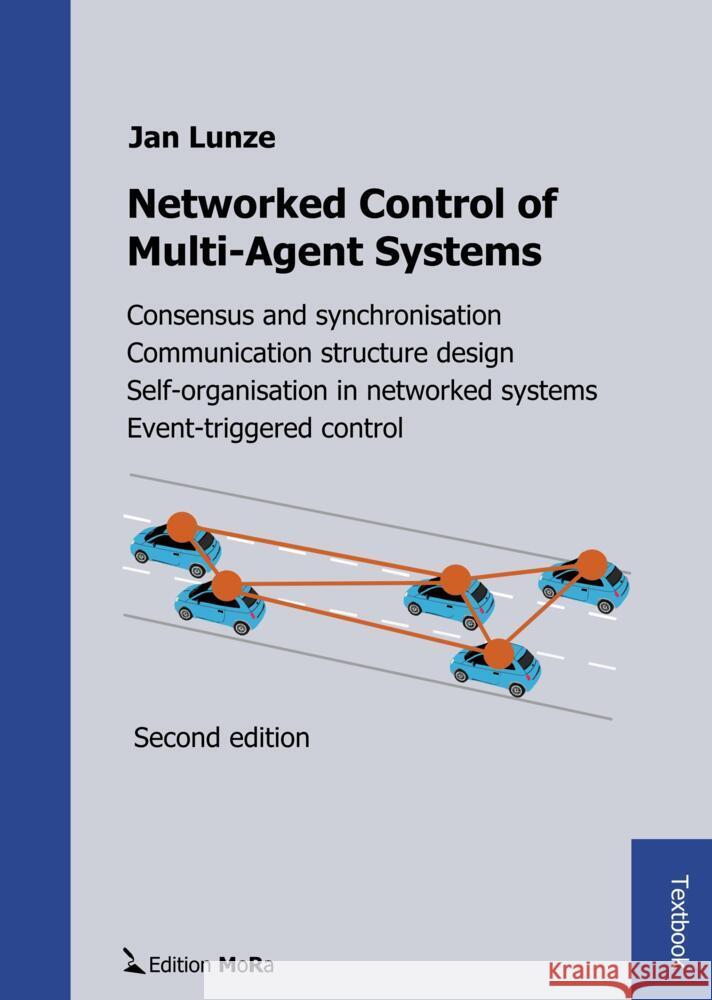
This is the first textbook that gives a thorough introduction to the graph-theoretical and systems-theoretical methods for networked dynamical systems. It includes * 82 examples and * 112 exercises with solutions.An accompanying booklet (ISBN 9789403648484) illustrates networked control by 12 application studies.The book starts with consensus and synchronisation as the classical problems of the field and continues with the communication structure design of networked controllers and with self-organised and event-triggered control, which are novel problems for which solutions have been...
This is the first textbook that gives a thorough introduction to the graph-theoretical and systems-theoretical methods for networked dynamical systems...
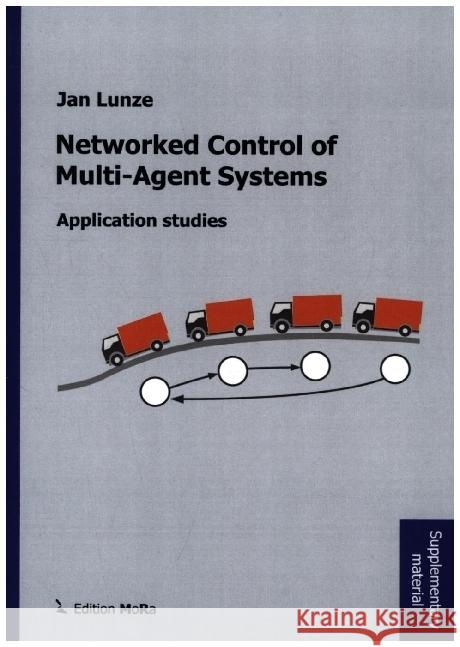
Twelve application studies illustrate how the methods of networked control explained in the textbook "Networked Control of Multi-Agent Systems" (ISBN 9789403648477, 2nd edition, 2022) can be used to solve practical problems. The examples include* Distributed algorithms for sensor networks,* Synchronisation of van der Pol oscillators,* Synchronisation phenomena in electrical power networks,* Nonlinear vehicle platoons,* Mu-split braking of a vehicle,* Self-service bike hiring,* Self-organised leader selection in a truck platoon,* Event-triggered control of a thermo-fluid process.Each...
Twelve application studies illustrate how the methods of networked control explained in the textbook "Networked Control of Multi-Agent Systems" (ISBN ...
The original motivation to investigate interconnected systems and decentralized control resulted from the impossibility to connect geographically distributed systems by reliable communication networks three decades ago. Energy or water distribution networks have been studied to answer the important question: Which control tasks can be accomplished by local feedback controllers that have to satisfy strict structural constraints. The revival of interest in such systems in recent years came with the availability of modern digital communication networks. The question is now: Which information...
The original motivation to investigate interconnected systems and decentralized control resulted from the impossibility to connect geographically dist...
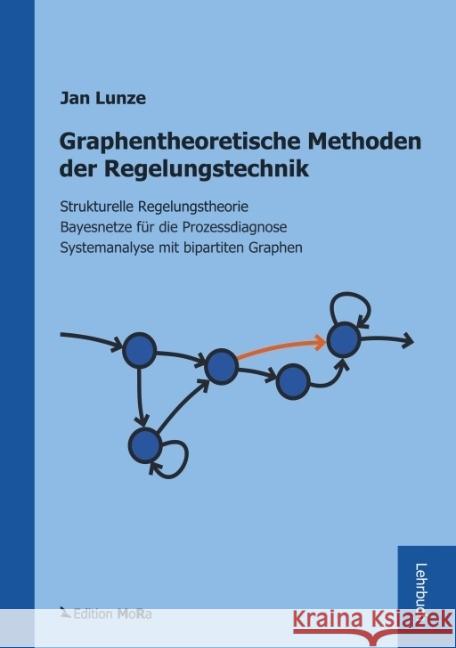
Häufig haben kompliziert erscheinende systemdynamische Eigenschaften relativ einfache Ursachen, die man mit graphentheoretischen Methoden aufdecken kann. Das Buch zeigt an zahlreichen Szenarien, wie man Analyse- und Entwurfsaufgaben systematisch vereinfachen kann. Dabei lernen die Leser, wie man aus vielfältigen Informationen Strukturgraphen abstrahiert und wie man mit verfügbaren graphentheoretischen Algorithmen Analyse-, Regelungs- und Diagnoseaufgaben besser strukturiert und vereinfacht.Zielgruppe: * Studenten aller ingenieurwissenschaftlichen Richtungen mit systemtheoretischen...
Häufig haben kompliziert erscheinende systemdynamische Eigenschaften relativ einfache Ursachen, die man mit graphentheoretischen Methoden aufdecken k...
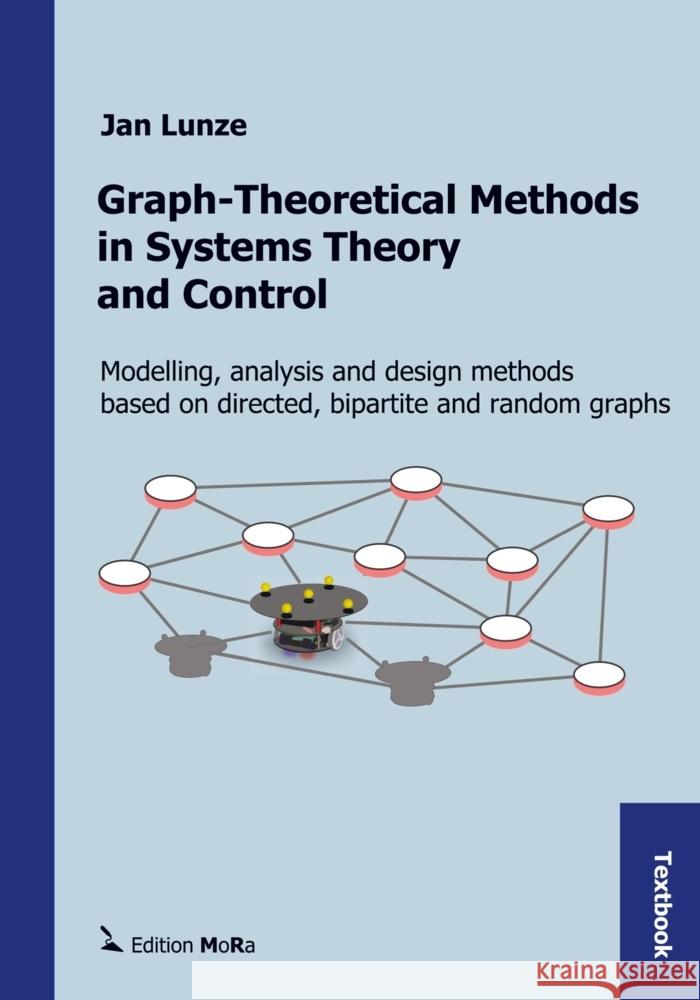
Many dynamical phenomena seem to be very complex, but have a relatively simple structural cause, which can be discovered by graph-theoretical methods. This textbook describes for numerous scenarios how to use the structural properties of a system to simplify modelling, analysis or design tasks. The readers learn to extract structure graphs from diverse information and to solve problems of systems and control theory in a graph-theoretical way.The book explains numerous graph-theoretical representations of dynamical systems: Block diagrams for the decomposition of systems; Signal-flow graphs...
Many dynamical phenomena seem to be very complex, but have a relatively simple structural cause, which can be discovered by graph-theoretical methods...
Dieses Lehrbuch gibt eine detaillierte Einführung in die Grundlagen der Wissensverarbeitung und zeigt, wie die behandelten Methoden für die Lösung ingenieurtechnischer Probleme eingesetzt werden können. Wissen wird in Form von Regeln, logischen Formeln, strukturierten Objekten oder Bayesnetzen dargestellt. Seine Verarbeitung führt auf Suchprobleme, für deren Lösung Methoden der Graphensuche schrittweise erweitert werden. Zahlreiche Beispiele demonstrieren die Anwendung der beschriebenen Verfahren für intelligente Roboter, die Steuerung verfahrenstechnischer Prozesse, die...
Dieses Lehrbuch gibt eine detaillierte Einführung in die Grundlagen der Wissensverarbeitung und zeigt, wie die behandelten Methoden für die Lösung ...
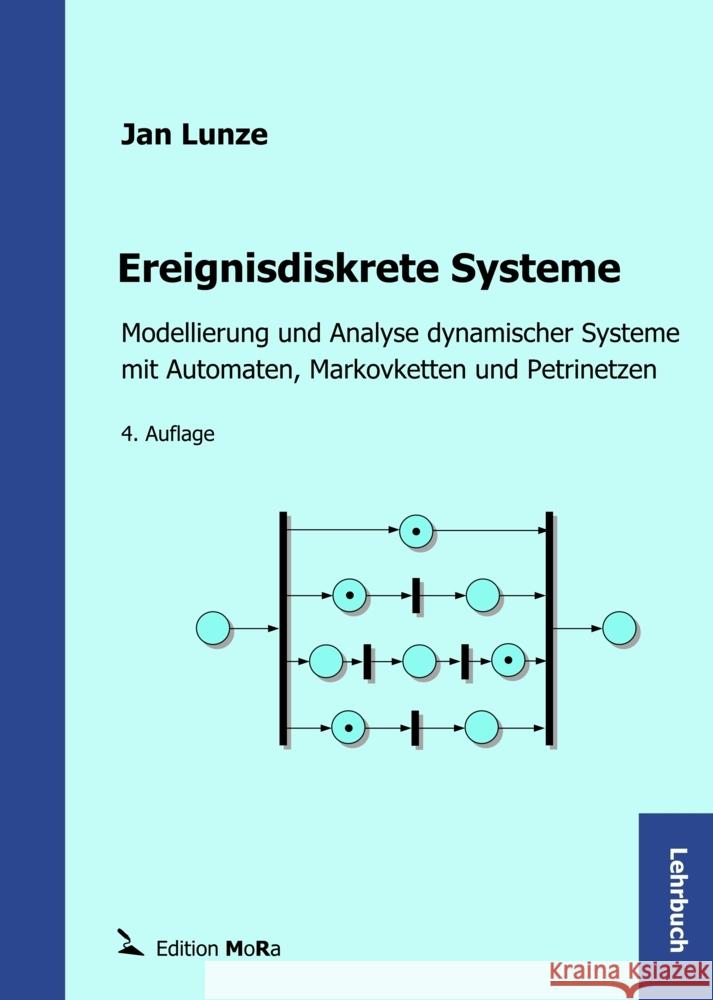
In vielen technischen Anwendungsgebieten sowie in der Informatik bilden ereignisdiskrete Modellformen die Grundlage für die Systemanalyse. Das breite Spektrum derartiger Modelle sowie die dazu gehörigen Analyseverfahren werden in diesem Lehrbuch eingeführt, erläutert und durch Beispiele und Übungsaufgaben illustriert:# Deterministische und nichtdeterministische Automaten, die als Eingangs-Ausgangs-Automaten in der Automatisierungstechnik angewendet werden und in der Informatik auf die Definition regulärer Sprachen führen.# Automatennetze für die komponentenorientierte Modellbildung.#...
In vielen technischen Anwendungsgebieten sowie in der Informatik bilden ereignisdiskrete Modellformen die Grundlage für die Systemanalyse. Das breite...