Organisation for Economic Co-Operation and Development (OECD)
The world is becoming increasingly global. This raises important challenges for regulatory processes which still largely emanate from domestic jurisdictions. In order to eliminate unnecessary regulatory divergences and to address the global challenges pertaining to systemic risks, the environment, and human health and safety, governments increasingly seek to better articulate regulations across borders and to ensure greater enforcement of rules. But, surprisingly, the gains that can be achieved through greater co-ordination of rules and their application across jurisdictions remain largely...
The world is becoming increasingly global. This raises important challenges for regulatory processes which still largely emanate from domestic jurisdi...
Organisation for Economic Co-Operation and Development (OECD)
This publication examines the critical issues surrounding water security (water shortage, water excess, inadequate water quality, the resilience of freshwater systems), providing a rationale for a risk-based approach and the management of trade-offs between water and other (sectoral and environmental) policies. The report sets out a three-step process to "know," "target" and "manage" water risks: (1) appraising the risks, (2) judging the tolerability and acceptability of risks and weighing risk-risk trade-offs, and (3) calibrating appropriate responses. The publication provides...
This publication examines the critical issues surrounding water security (water shortage, water excess, inadequate water quality, the resilience of fr...
Organisation for Economic Co-Operation and Development (OECD)
Urban, demographic and climate trends are increasingly exposing cities to risks of having too little, too much and too polluted water. Facing these challenges requires robust public policies and sound governance frameworks to co-ordinate across multiple scales, authorities, and policy domains. Building on a survey of 48 cities in OECD countries and emerging economies, the report analyses key factors affecting urban water governance, discusses trends in allocating roles and responsibilities across levels of government, and assesses multi-level governance gaps in urban water management. It...
Urban, demographic and climate trends are increasingly exposing cities to risks of having too little, too much and too polluted water. Facing these ch...
Organisation for Economic Co-Operation and Development (OECD)
This report focuses on the urban water management challenges facing cities across OECD countries, and explores both national and local policy responses with respect to water-risk exposure, the state of urban infrastructures and dynamics, and institutional and governance architectures. The analyses focus on four mutually dependent dimensions - finance, innovation, urban-rural co-operation and governance - and proposes a solutions-oriented typology based on urban characteristics. The report underlines that sustainable urban water management will depend on collaboration across different tiers of...
This report focuses on the urban water management challenges facing cities across OECD countries, and explores both national and local policy response...
Organisation for Economic Co-Operation and Development (OECD)
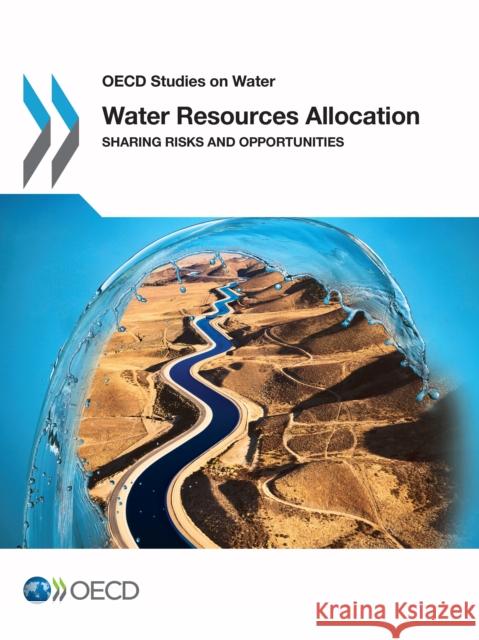
Water resources allocation determines who is able to use water resources, how, when and where. It directly affects the value (economic, ecological, socio-cultural) that individuals and society obtain from water resources. This report overviews how allocation works in a range of countries and how the performance of allocation arrangements can be improved to adjust to changing conditions. Capturing information from 27 OECD countries and key partner economies, the report presents key findings from the OECD Survey of Water Resources Allocation and case studies of successful allocation reform. It...
Water resources allocation determines who is able to use water resources, how, when and where. It directly affects the value (economic, ecological, so...
Organisation for Economic Co-Operation and Development (OECD)
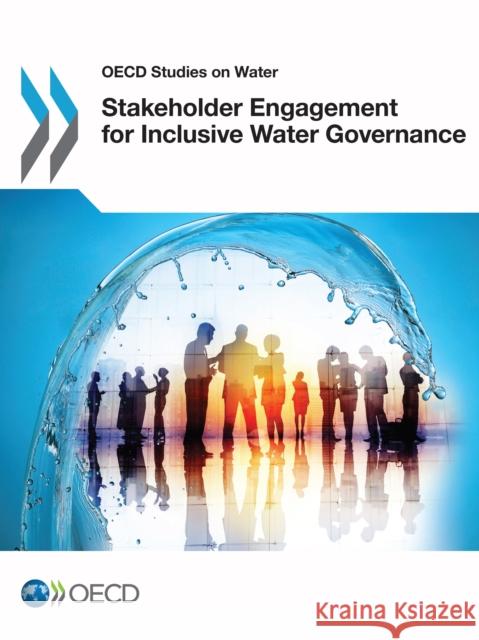
This report assesses the current trends, drivers, obstacles, mechanisms, impacts, costs and benefits of stakeholder engagement in the water sector. It builds on empirical data collected through an extensive survey across 215 stakeholders, within and outside the water sector, and 69 case studies collected worldwide. It highlights the increasing importance of stakeholder engagement in the water sector as a principle of good governance and the need for better understanding of the pressing and emerging issues related to stakeholder engagement. These include: the shift of power across...
This report assesses the current trends, drivers, obstacles, mechanisms, impacts, costs and benefits of stakeholder engagement in the water sector. It...
Organisation for Economic Co-Operation and Development (OECD)
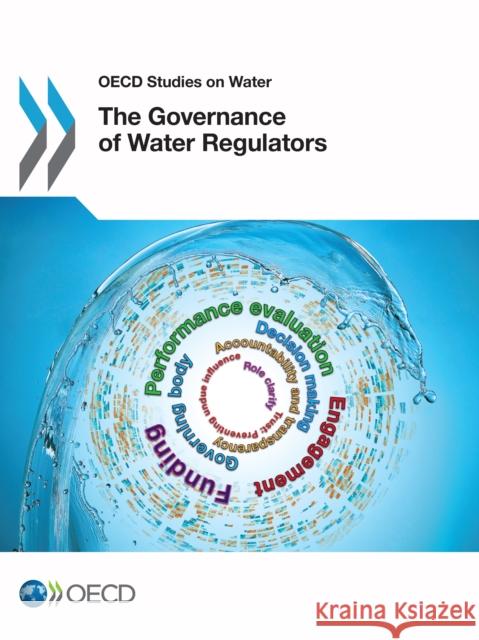
The establishment of dedicated regulatory bodies in charge of regulating water services, whilst being recent, is nevertheless a consistent trend among OECD and non-OECD countries. This report presents a picture as of September 2014 of the governance arrangements, operational modalities and use of regulatory tools across a sample of 34 established water regulators. It relies on the OECD Best Practice Principles for Regulatory Policy: The Governance of Regulators to structure the information collected through a survey exercise. It has been developed in close co-operation with the OECD Network...
The establishment of dedicated regulatory bodies in charge of regulating water services, whilst being recent, is nevertheless a consistent trend among...
Organisation for Economic Co-Operation and Development (OECD)
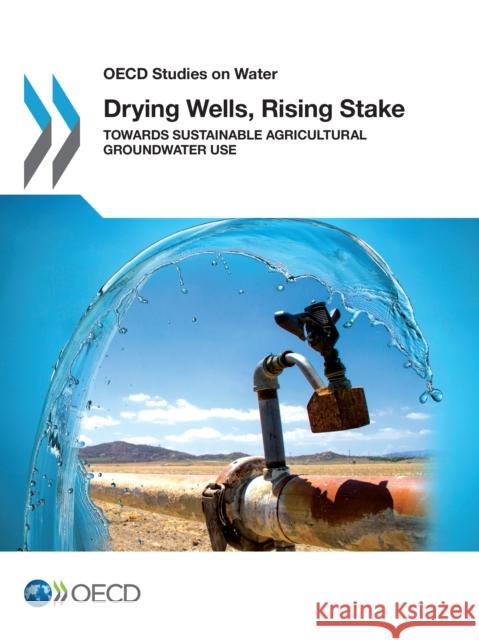
Groundwater has provided great benefits to agriculture irrigation in semi-arid OECD countries, but its intensive use beyond recharge in certain regions has depleted resources and generated significant negative environmental externalities. The report provides a characterisation of the diversity of groundwater systems, reviews policies in OECD countries, and proposes a package of recommendations to ensure that groundwater can sustain its services to agriculture and contribute to climate change adaptation.
Groundwater has provided great benefits to agriculture irrigation in semi-arid OECD countries, but its intensive use beyond recharge in certain region...
Organisation for Economic Co-Operation and Development (OECD)
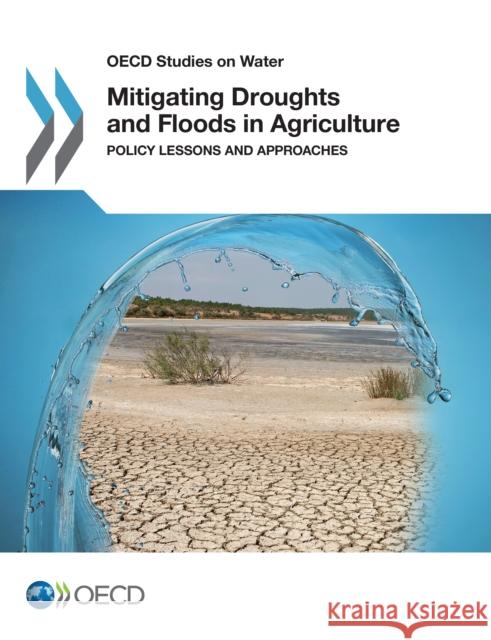
Climate change is expected to increase the frequency and magnitude of extreme weather events, notably of droughts and floods to which the agriculture sector is particularly exposed. While agricultural productivity growth and policy development have allowed to better cope with these risks and reduce overall impacts on the sector and commodity markets, there is substantial room to improve policy responses and co-ordinate across policy domains, including with respect to water rights and allocation, weather and hydrological information, innovation and education, and insurance and compensation...
Climate change is expected to increase the frequency and magnitude of extreme weather events, notably of droughts and floods to which the agriculture ...
Organisation for Economic Co-Operation and Development (OECD)
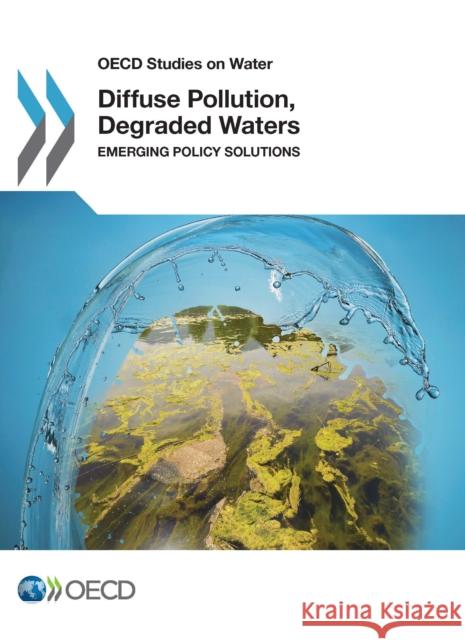
After decades of regulation and investment to reduce point source water pollution, OECD countries still face water quality challenges (e.g. eutrophication) from diffuse agricultural and urban sources of pollution, that is disperse pollution from surface runoff, soil filtration and atmospheric deposition. The relative lack of progress reflects the complexities of controlling multiple pollutants from multiple sources, their high spatial and temporal variability, associated transactions costs, and limited political acceptability of regulatory measures. This report outlines the water quality...
After decades of regulation and investment to reduce point source water pollution, OECD countries still face water quality challenges (e.g. eutrophica...