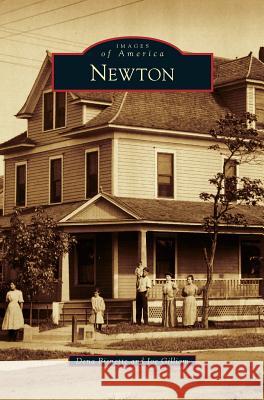
Newton, Kansas, was established by the Atchison, Topeka, and Santa Fe Railroad as a new railhead for the Chisholm Cattle Trail in 1871. After two years as the wildest cow town in the West, Newton became a center for Mennonite migration and wheat production in east central Kansas, with the railroad moving it all. In addition to eastern European immigrants and hard winter wheat seed, the rails brought even more people from differing backgrounds, all of whom helped the town grow and change. Images of America: Newton shows those people and the places where they worked, worshipped, and played and...
Newton, Kansas, was established by the Atchison, Topeka, and Santa Fe Railroad as a new railhead for the Chisholm Cattle Trail in 1871. After two year...
In 1869, Concordia, Kansas, was declared the county seat of what would become Cloud County. At first, the town existed only on paper as a project being pushed by James M. Hagaman and a small group of partners. Once development started, Concordia rapidly grew to become a center of commerce south of the Republican River that eventually attracted four railroad lines. It became a town of landmarks, including several famous hotels, two opera houses, Nazareth Convent, and a thriving downtown area. Characters in the story of Concordia include French Canadian immigrants, nuns, pilots, quarreling...
In 1869, Concordia, Kansas, was declared the county seat of what would become Cloud County. At first, the town existed only on paper as a project bein...