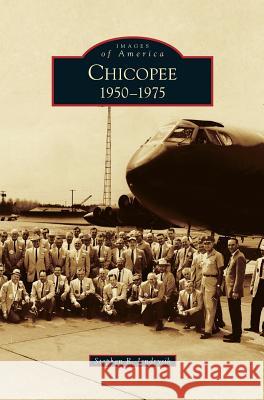
On September 19, 1939, Chicopee mayor Anthony J. Stonina was sitting at his desk wiping away tears. The three-term mayor had just finished reading a brief letter from the US War Department. The seven square miles of Chicopee's tobacco plains had been selected as the site for the Northeast base of the Army Air Corps. The city was destined to permanently be a "City with Wings." In 1942, the facility, already the largest air base in the country, was named to honor the memory of military aviation pioneer Maj. Gen. Oscar Westover. Chicopee: 1950-1975 tells the story of a three-decade Cold War...
On September 19, 1939, Chicopee mayor Anthony J. Stonina was sitting at his desk wiping away tears. The three-term mayor had just finished reading a b...
In 1935, Chicopee was a small city struggling to emerge from a crippling depression and economic collapse. In 1936, the Connecticut River flooded, turning Chicopee's Willimansett section into a giant lake, and on September 21, 1938, a storm roared up the Connecticut Valley with winds of over 100 miles per hour. Rain flooded the already devastated streets and wiped out the Chicopee Falls Bridge. Between these disasters, the U.S. Congress passed the Wilcox Act, and in 1939, Secretary of War Harry W. Woodring announced that the tobacco plains of Chicopee had been selected as the site for the...
In 1935, Chicopee was a small city struggling to emerge from a crippling depression and economic collapse. In 1936, the Connecticut River flooded, tur...