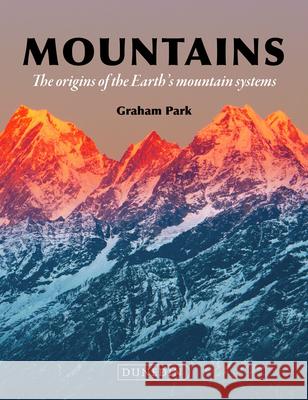
Most mountains on Earth occur within relatively well-defined, narrow belts separated by wide expanses of much lower-lying ground. Their distribution is not random but is caused by the now well-understood geological processes of plate tectonics. Some mountains mark the site of a former plate collision where one continental plate has ridden up over another, resulting in a zone of highly deformed and elevated rocks. Others are essentially volcanic in origin. The most obvious mountain belts today-the Himalayas, the Alps and the Andes, for example-are situated at currently active plate boundaries....
Most mountains on Earth occur within relatively well-defined, narrow belts separated by wide expanses of much lower-lying ground. Their distribution i...
Our world is made of rock. Those who live in a landscape where rock outcrops are obvious will have wondered about the kind of rock they are looking at and how they came to be where they are now. Graham Park explains in simple terms what geology can tell us about the world.
Our world is made of rock. Those who live in a landscape where rock outcrops are obvious will have wondered about the kind of rock they are looking at...