Gilles Deleuze was one of the most influential figures in twentieth-century philosophy, well known for his works on the philosophy of art and for his master-works, "Difference and Repetition" and - with Felix Guattari - "A Thousand Plateaus" and "Anti-Oedipus.""""""Cinema I" is the first volume of Deleuze's revolutionary work on the theory of cinema (concluded in "Cinema II," also available in the Bloomsbury Revelations series). Drawing on the philosophy of Henri Bergson, Deleuze identified his work as "a logic of the cinema," setting out to "isolate certain cinematographic concepts"...
Gilles Deleuze was one of the most influential figures in twentieth-century philosophy, well known for his works on the philosophy of art and for his ...
Gilles Deleuze was one of the most influential figures in twentieth-century philosophy, whose master-works, "Difference and Repetition" and - with Felix Guattari - "A Thousand Plateaus" and "Anti-Oedipus" have become one of the most widely-influential bodies of work in contemporary thought." Cinema II" is Deleuze's second work on cinema, completing the reassessment of the art form begun in "Cinema I." Influenced by the philosophy of Henri Bergson, Deleuze here offers a compelling analysis of the cinematic treatment of time and memory, thought and speech. The work draws on examples from major...
Gilles Deleuze was one of the most influential figures in twentieth-century philosophy, whose master-works, "Difference and Repetition" and - with Fel...
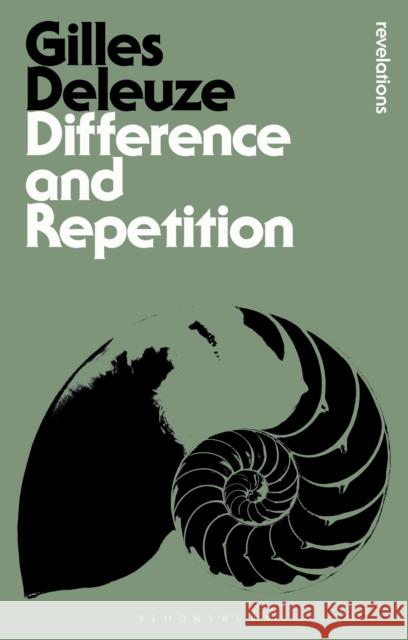
Since its publication in 1968, Difference and Repetition, an exposition of the critique of identity, has come to be considered a contemporary classic in philosophy and one of Gilles Deleuze's most important works. The text follows the development of two central concepts, those of pure difference and complex repetition. It shows how the two concepts are related, difference implying divergence and decentring, repetition being associated with displacement and disguising. The work moves deftly between Hegel, Kierkegaard, Freud, Althusser and Nietzsche to establish a fundamental critique of...
Since its publication in 1968, Difference and Repetition, an exposition of the critique of identity, has come to be considered a contemporary classic ...