Buildings have often been studies whole in space, but never before have they been studied whole in time. How Buildings Learn is a masterful new synthesis that proposes that buildings adapt best when constantly refined and reshaped by their occupants, and that architects can mature from being artists of space to becoming artists of time.
From the connected farmhouses of New England to I.M. Pei's Media Lab, from "satisficing" to "form follows funding," from the evolution of bungalows to the invention of Santa Fe Style, from Low Road military surplus buildings to a High Road English...
Buildings have often been studies whole in space, but never before have they been studied whole in time. How Buildings Learn is a masterful new...
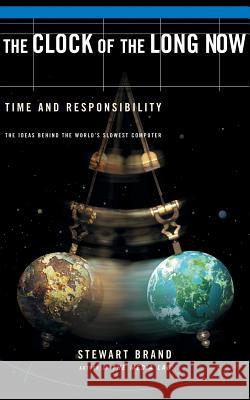
Using the designing and building of the Clock of the Long Now as a framework, this is a book about the practical use of long time perspective: how to get it, how to use it, how to keep it in and out of sight. Here are the central questions it inspires: How do we make long-term thinking automatic and common instead of difficult and rare? Discipline in thought allows freedom. One needs the space and reliability to predict continuity to have the confidence not to be afraid of revolutions Taking the time to think of the future is more essential now than ever, as culture accelerates beyond...
Using the designing and building of the Clock of the Long Now as a framework, this is a book about the practical use of long time perspective: ...