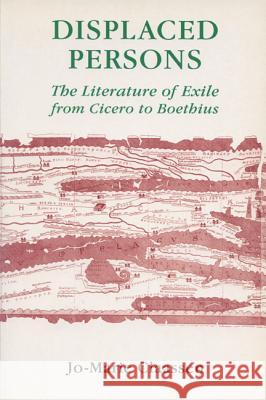
Exile is a political act involving loss of power. Five authors -- Cicero, Ovid, Seneca the Younger, Dio Chrysostomus, and Anicius Manlius Boethius -- all exiled from Rome, are examined in this fascinating study of the depiction of exile. Although separated from the first four by several centuries, Boethius has an intellectual, circumstantial, and spiritual affinity with them. Jo-Marie Claassen explores the various means of literary sublimation that individual exiles found for the feeling of social and political isolation that they experienced.
Exile is a political act involving loss of power. Five authors -- Cicero, Ovid, Seneca the Younger, Dio Chrysostomus, and Anicius Manlius Boethius -- ...
Exile is a political act involving loss of power. Five authors -- Cicero, Ovid, Seneca the Younger, Dio Chrysostomus, and Anicius Manlius Boethius -- all exiled from Rome, are examined in this fascinating study of the depiction of exile. Although separated from the first four by several centuries, Boethius has an intellectual, circumstantial, and spiritual affinity with them. Jo-Marie Claassen explores the various means of literary sublimation that individual exiles found for the feeling of social and political isolation that they experienced.
Exile is a political act involving loss of power. Five authors -- Cicero, Ovid, Seneca the Younger, Dio Chrysostomus, and Anicius Manlius Boethius -- ...
Exile is a political act, involving loss of power. Five authors, all exiled from Rome, are examined in this book, which analyses the literature of exile and takes its consideration through to the virtual end of the Classical era: the author examines the various means of literary sublimation that individual exiles - Cicero, Ovid, Seneca the Younger, Dio Chrysostom and Anicius Manlius Boethius - found for the feeling of social and political isolation that they experienced.
Exile is a political act, involving loss of power. Five authors, all exiled from Rome, are examined in this book, which analyses the literature of exi...